
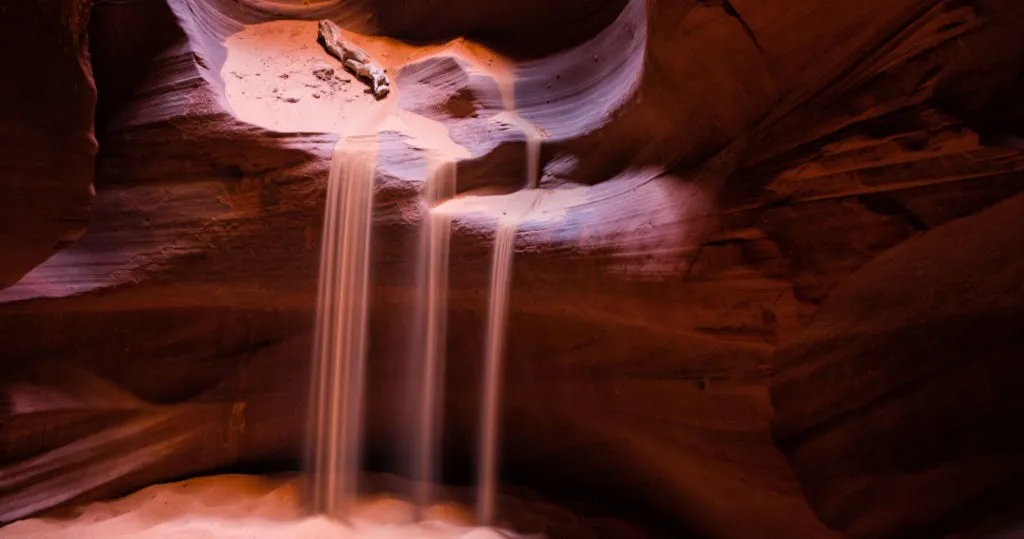

Tim and I visited Upper and Lower Antelope Canyon on the same day. We took the same tours, walked through the same red sandstone walls, and came away with completely different favorites. Tim’s was Lower. Mine was Upper.
That split tells you something important: these aren’t two versions of the same experience. They’re genuinely different canyons with different characters, different physical demands, and different strengths as subjects for photography. The right choice depends on who you are and what you’re looking for, and if you have time to visit both, you should.
Here’s everything you need to decide.
Upper vs. Lower Antelope Canyon
Antelope Canyon is located in Page, Arizona. Both slot canyons are located on Navajo lands and can only be visited on a tour. Here’s a comparison of Upper and Lower Antelope Canyons.
| Upper Antelope Canyon | Lower Antelope Canyon | |
|---|---|---|
| Entry | Ground level, walk straight in | Descend via ladders |
| Shape | Upside-down V — wider at base | V-shaped — narrow at base |
| Difficulty | Easy | Moderate |
| Accessibility | Not wheelchair accessible; more manageable for most | Not wheelchair accessible; ladders required |
| Transport | Provided — 4WD truck from Page | Not provided — drive yourself |
| Tour cost | ~$100–$189 per person incl. Navajo fee | ~$70+ per person incl. Navajo fee |
| Light beams | Reliable, 10:30am–1:30pm, May–Sept most dramatic | Occasional, not reliable |
| Crowds | Intense at midday; more controlled group sizes | Intense at midday; can feel more congested |
| Book ahead | 3–6 months for peak midday slots | Easier availability; still book in advance |
| Tour operators | Multiple | Two only: Ken’s Tours & Dixie Ellis’ |
| Tour length | ~90 min total | ~60–90 min total |
| “Wow” factor | Light beams, dramatic height, iconic photos | Spiraling formations, vivid colors, ladders |
Upper Antelope Canyon
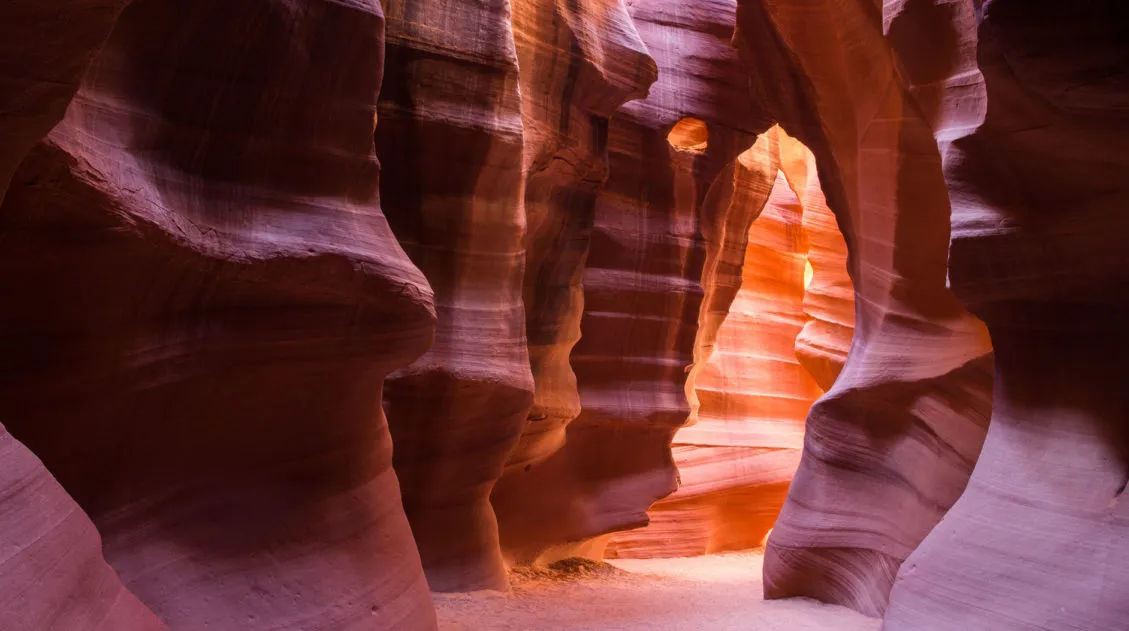
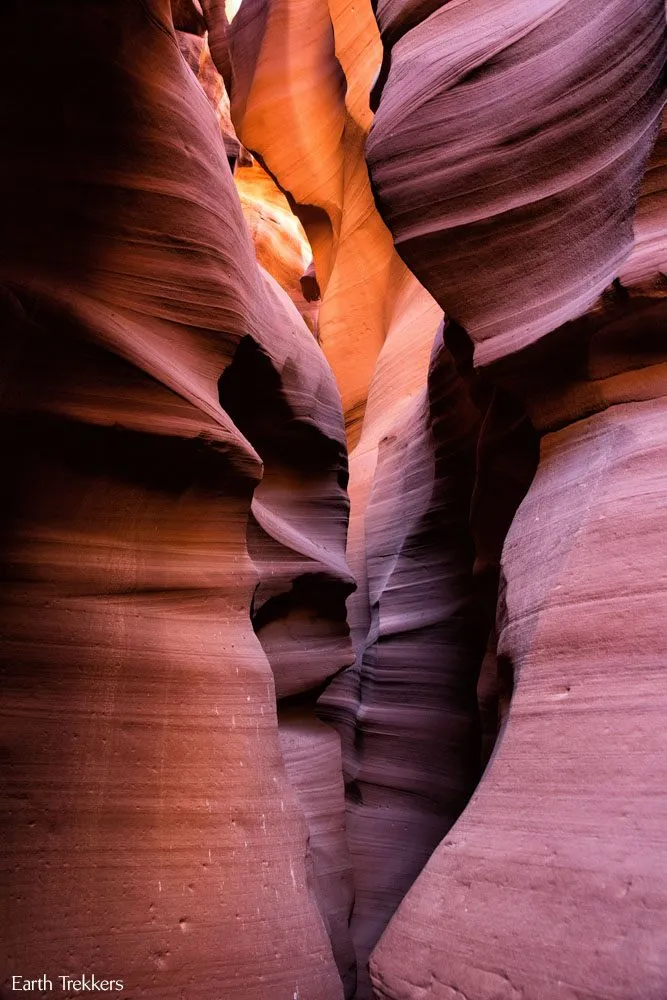
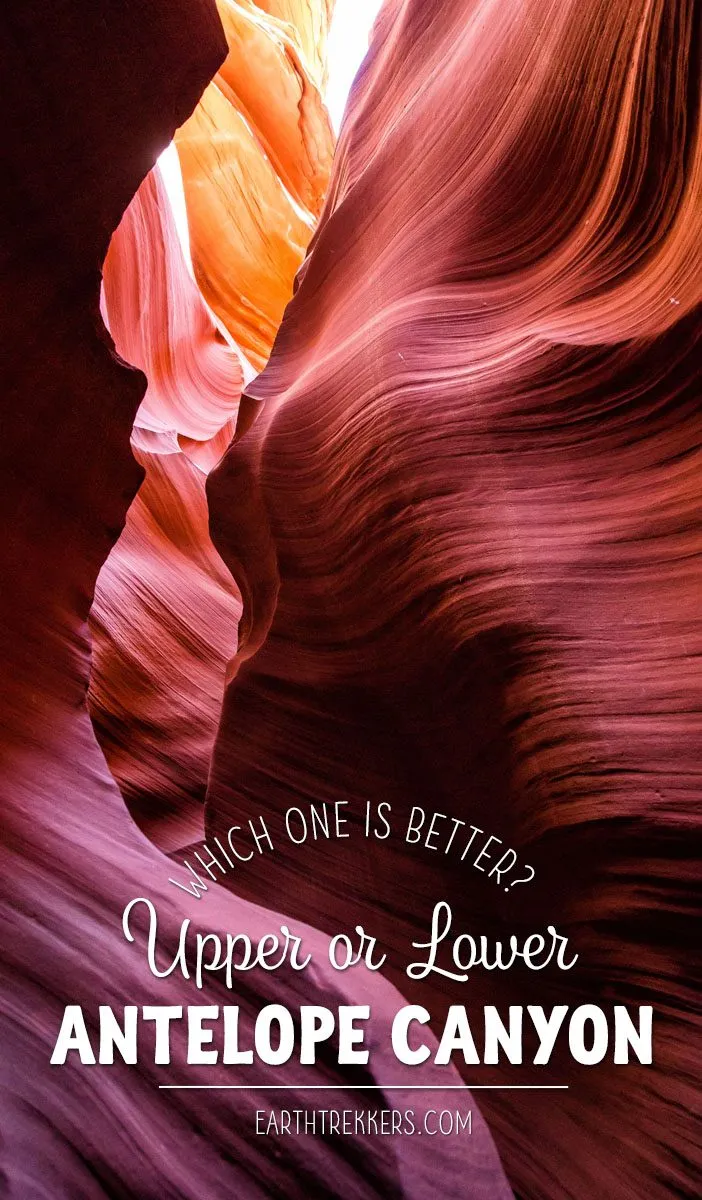
Upper Antelope Canyon is the canyon most people picture when they think of Antelope Canyon, with the iconic beams of light shafting down through a narrow opening in the rock, illuminating swirling dust against walls of deep red and orange sandstone. The canyon sits at ground level, you walk straight in, and the walls rise 120 feet above a flat, sandy floor. It’s the more accessible of the two, the more expensive, and the harder to get a reservation for.
The grand scale, the shifting colors, and photographing the falling sands make it my favorite of the two.
For everything you need to plan your visit, including tour companies, pricing, what to bring, and photography tips, read our complete Upper Antelope Canyon guide ↓
How to Visit Upper Antelope Canyon (+ Lots of Photos!)
Tour companies, photos, and what to expect on a tour of Upper Antelope Canyon.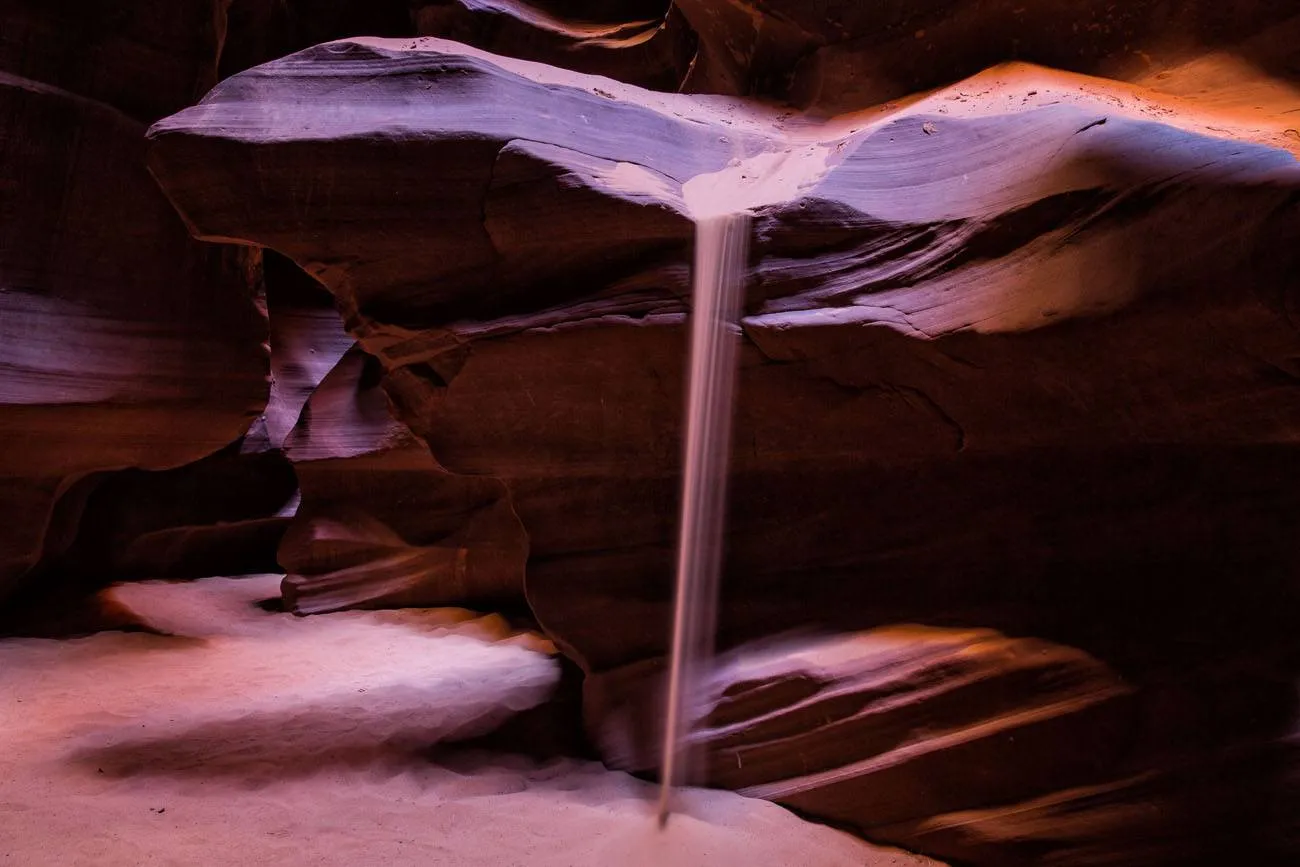

Lower Antelope Canyon
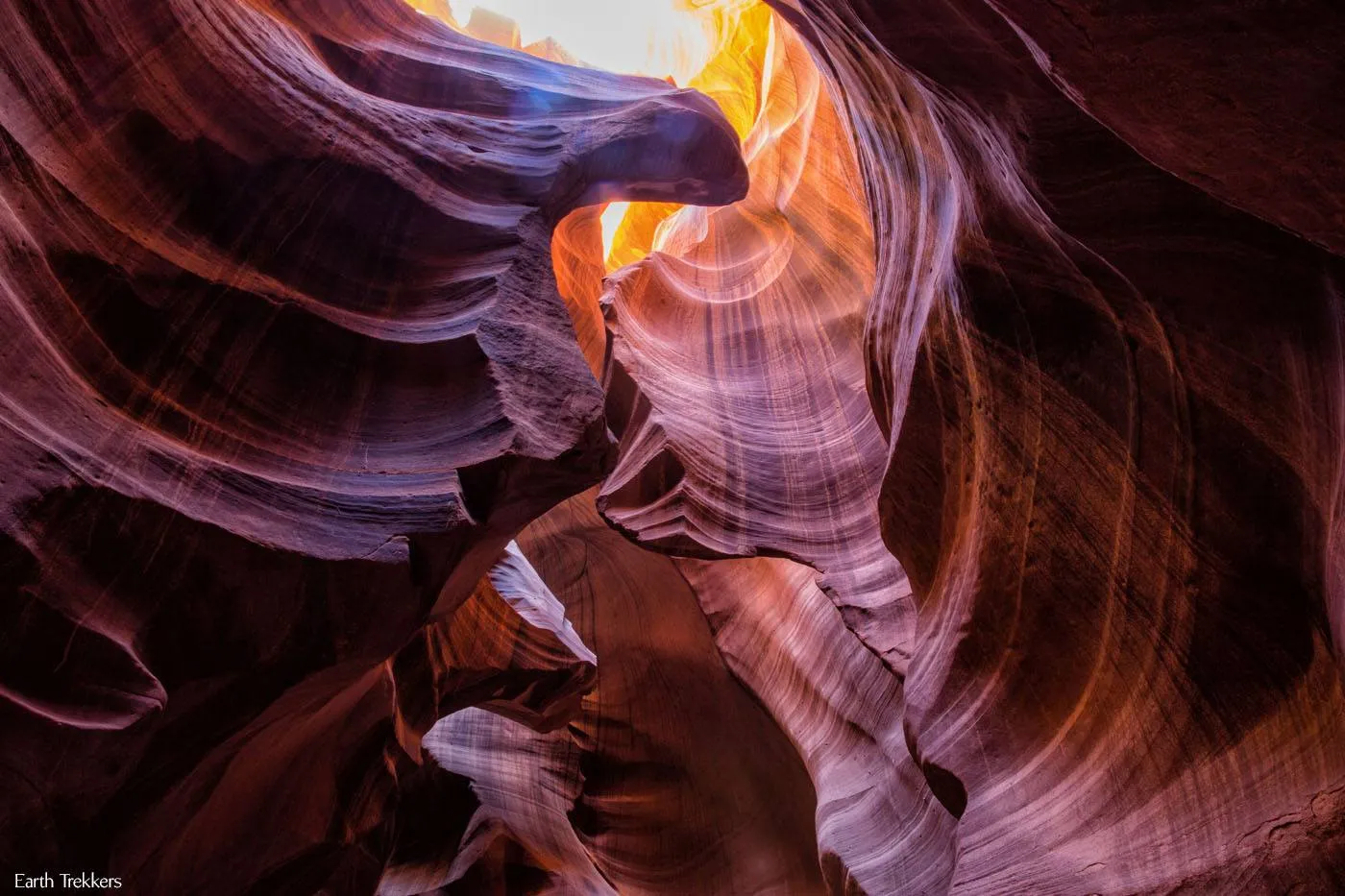
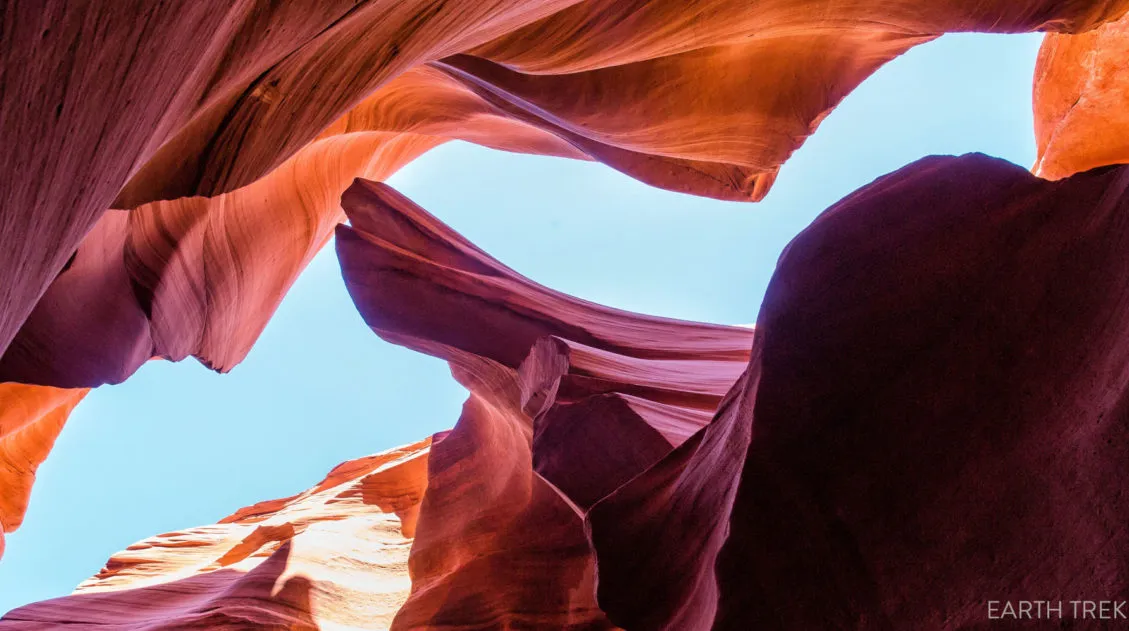
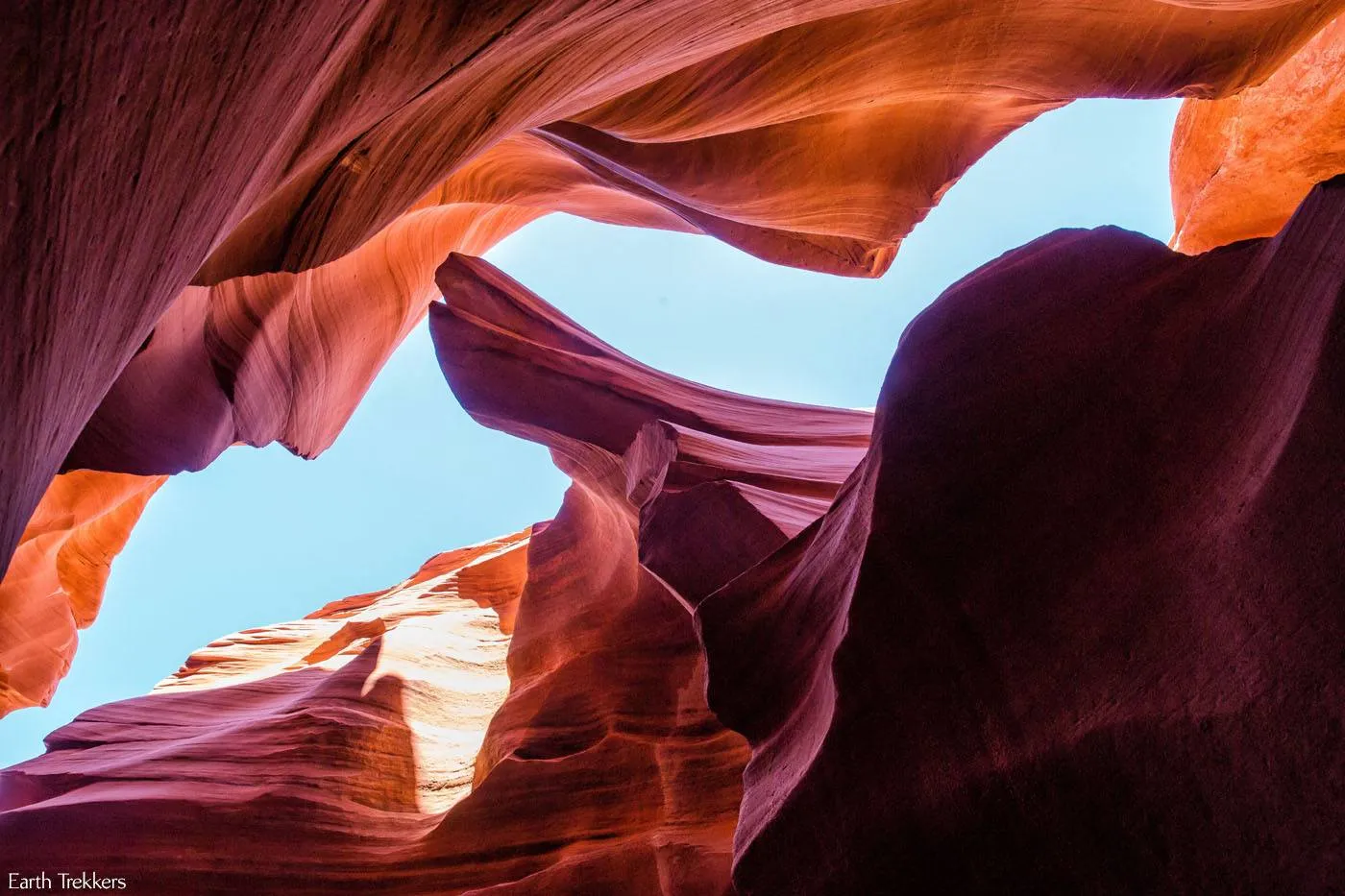
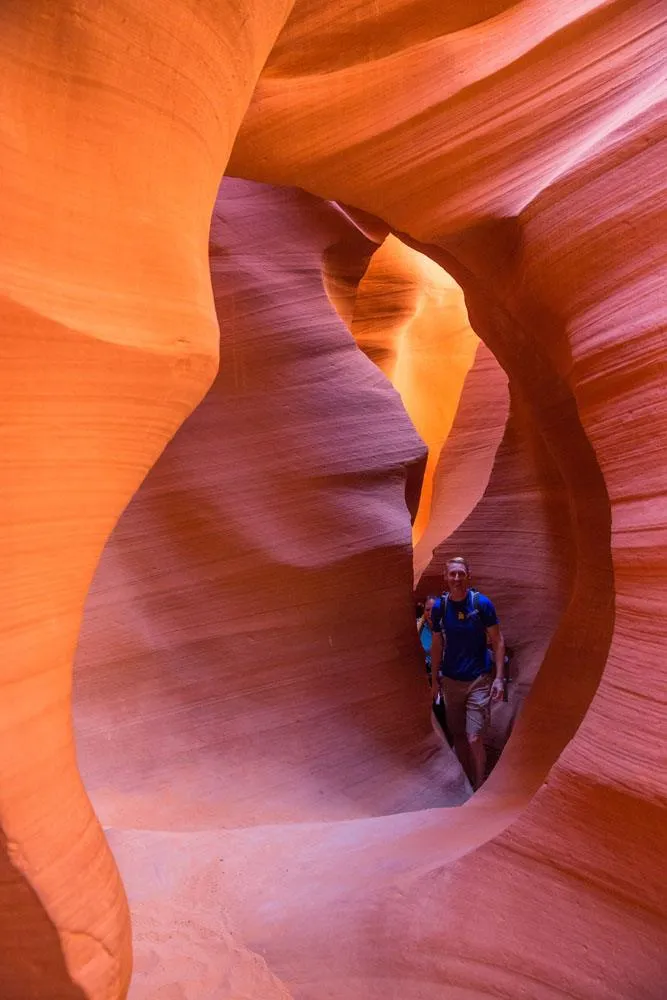
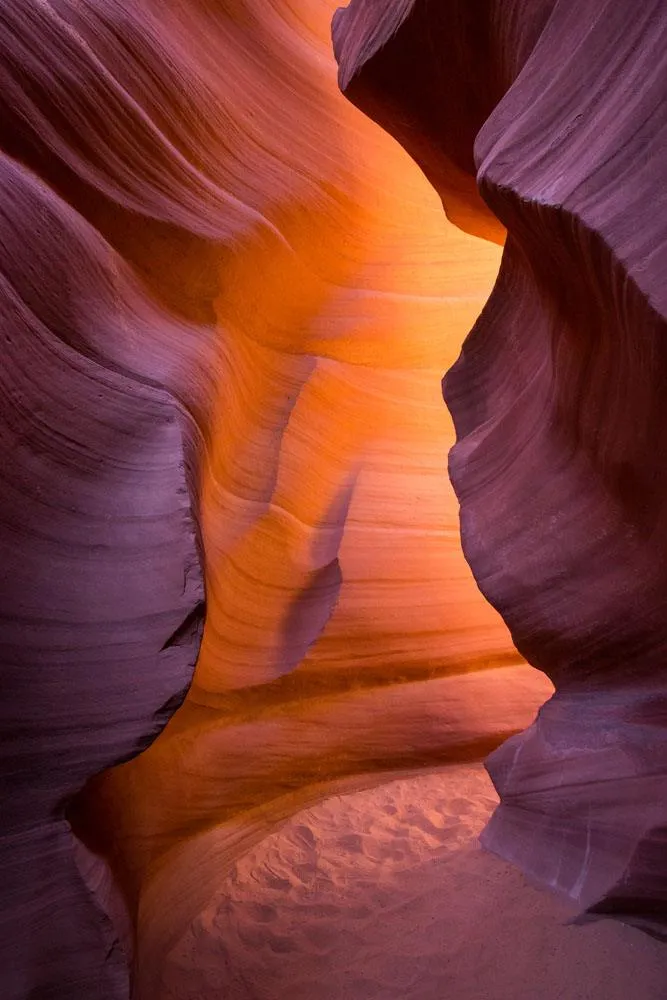
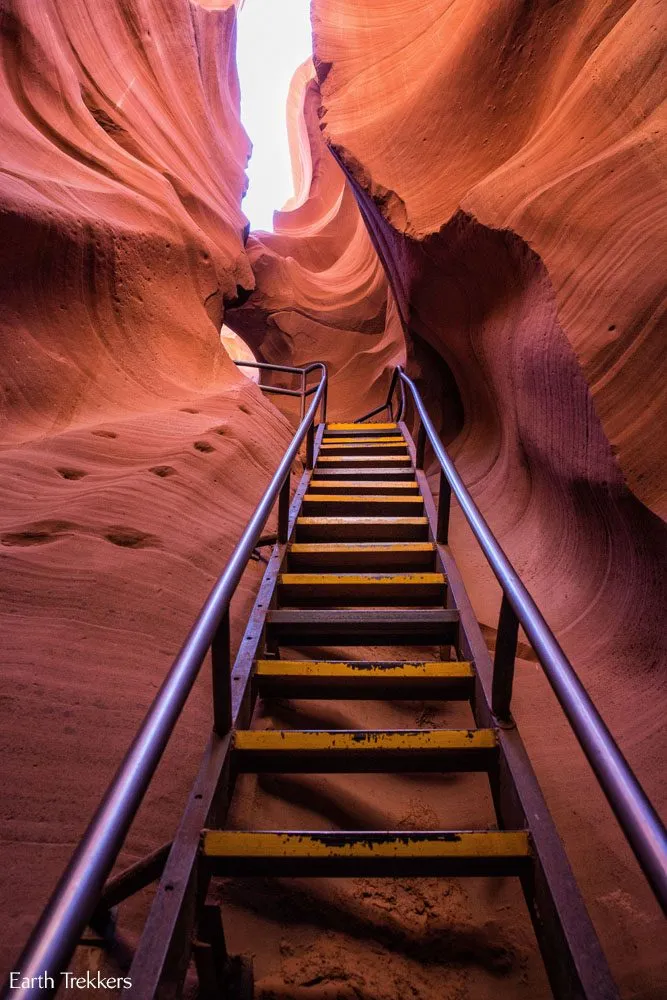
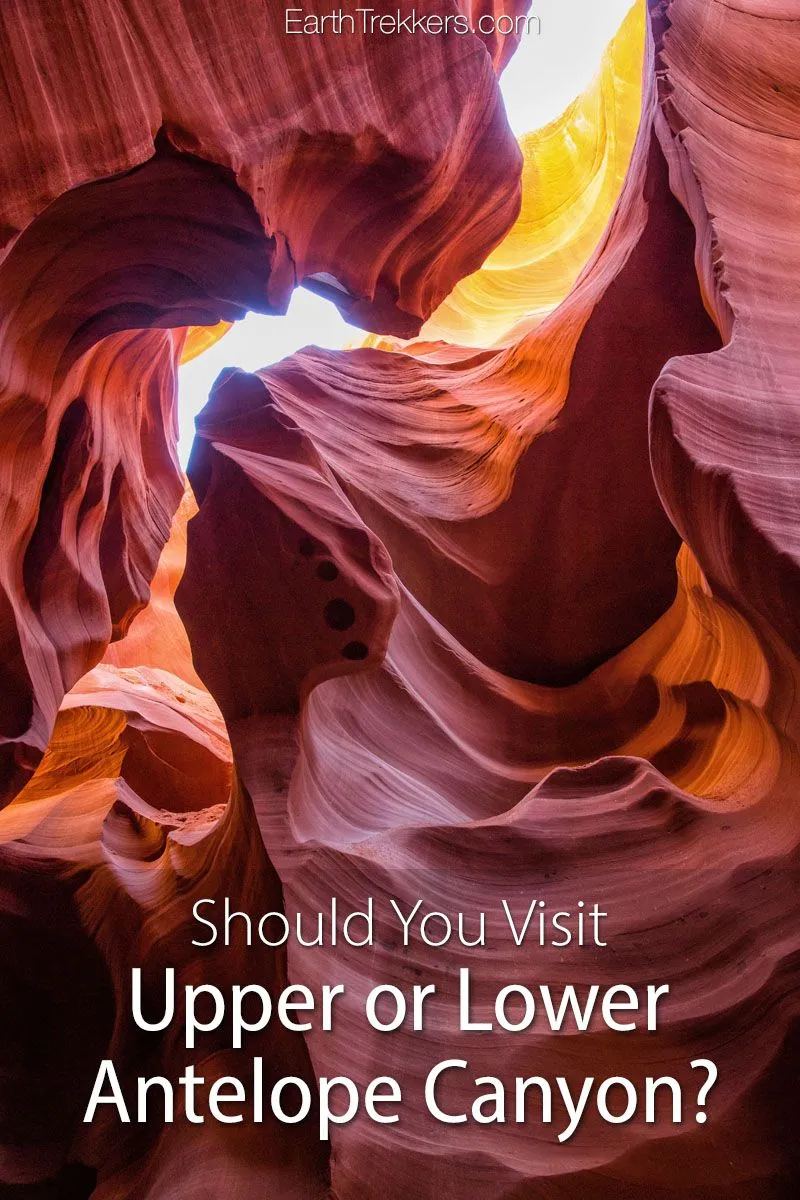
Lower Antelope Canyon is longer, narrower, and more physical than Upper. You descend into it via ladders rather than walking in at ground level, the passages squeeze tight around you in places, and the canyon’s V-shape means more diffuse, vivid light throughout the day rather than the dramatic beams Upper is known for. It costs less, is somewhat easier to book, and has only two tour operators.
This is Tim’s favorite of the two canyons. The narrow passageways, the ladders, and the vivid orange and purple colors are what stood out the most to him.
For everything you need to plan your visit, including tour companies, pricing, what to bring, and what to expect on the ladders, read our complete Lower Antelope Canyon guide ↓
Lower Antelope Canyon: Tours, Pricing & What to Expect
Everything you need to know to plan a visit to Lower Antelope Canyon.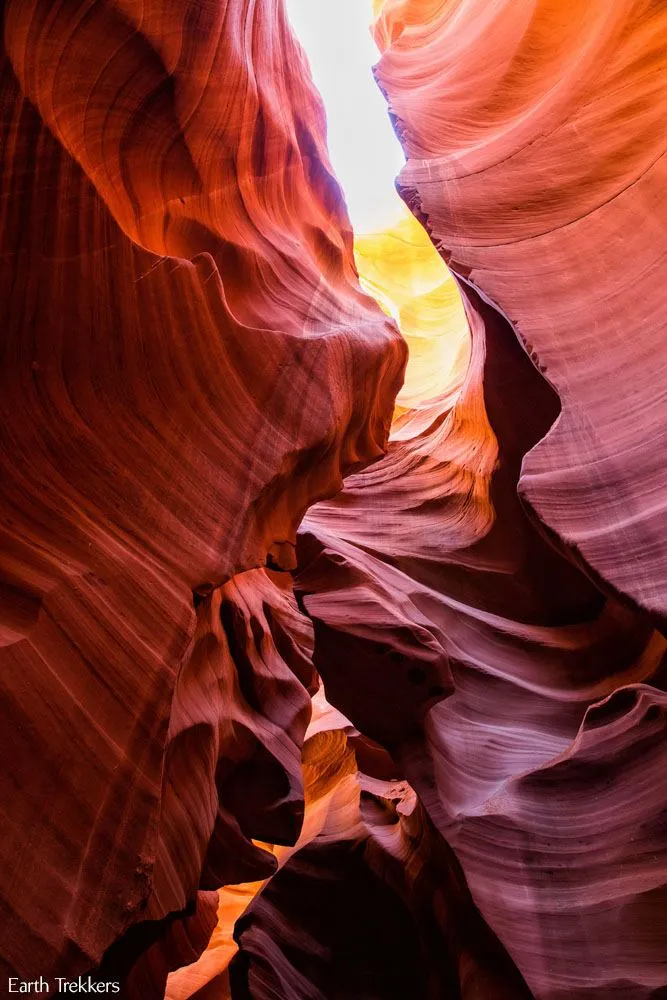
Key Differences Between Upper & Lower Antelope Canyons
The Light Beams
This is the biggest differentiator between the two canyons. Upper Antelope Canyon produces reliable, dramatic light beams between 10:30 am and 1:30 pm on sunny days, most spectacular from May through September. They’re the reason most people visit and the reason midday slots book out months in advance.
Lower Antelope Canyon occasionally produces light beams, we caught a few on our visit, but they’re not reliable and shouldn’t be the reason you choose Lower. If seeing light beams is a priority, Upper is the best option.
How You Enter
Upper Antelope Canyon is a ground-level walk-in. Lower requires descending a series of ladders into the canyon, navigating some narrow passages, and climbing back out at the end. For most healthy adults this isn’t a significant obstacle (we loved the ladders) but it’s a real consideration for anyone with knee or back issues, a fear of heights, or limited mobility. Upper is the significantly more accessible option for both.
Cost
Lower Antelope Canyon costs less. Upper tours run $100–$189 per person, including the Navajo entry fee, with premium pricing for midday light beam slots. Lower runs approximately $70+ per person for the General Tour. If budget is a factor, Lower is the easier choice.
Photography
Upper Antelope Canyon is the more photogenic canyon for most visitors: the light beams, the dramatic height of the walls, and the iconic compositions make it the canyon that produced the world’s most famous slot canyon images.
Lower is no less beautiful, but it requires more of the photographer: the pace is faster, the passages are narrower, and the light is more diffuse. That said, the spiraling formations and vivid colors in Lower produce extraordinary shots.
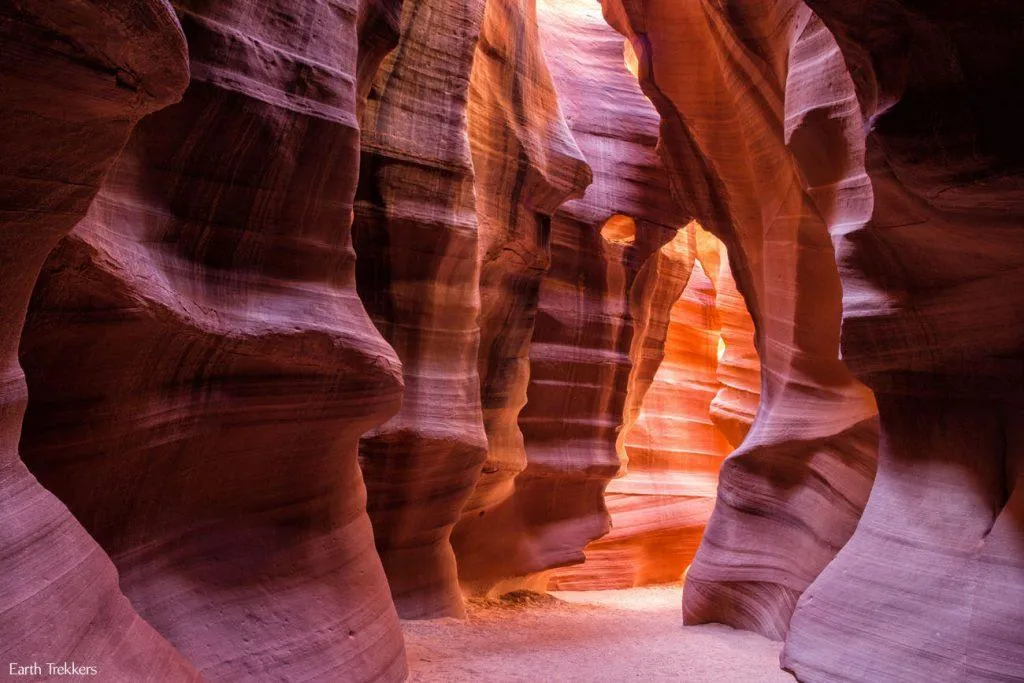
Upper Antelope Canyon
The Feeling Inside
Upper opens up around you. Lower pulls you in. This is the most subjective difference but also, for many visitors, the most memorable one.
Upper feels cathedral-like: expansive, dramatic, a place to stand and look. Lower feels exploratory: tight, twisting, a place to move through and discover. Tim preferred the latter. I preferred the former.
Crowds and Pacing
Both canyons are busy during peak season and both move visitors through on a schedule. Upper tends to feel slightly more controlled: group sizes are capped and the wider canyon floor means groups have more room. Lower can feel more congested at peak hours, with bottlenecks forming in the narrower passages. Both are best visited early morning or late afternoon if crowds matter to you.
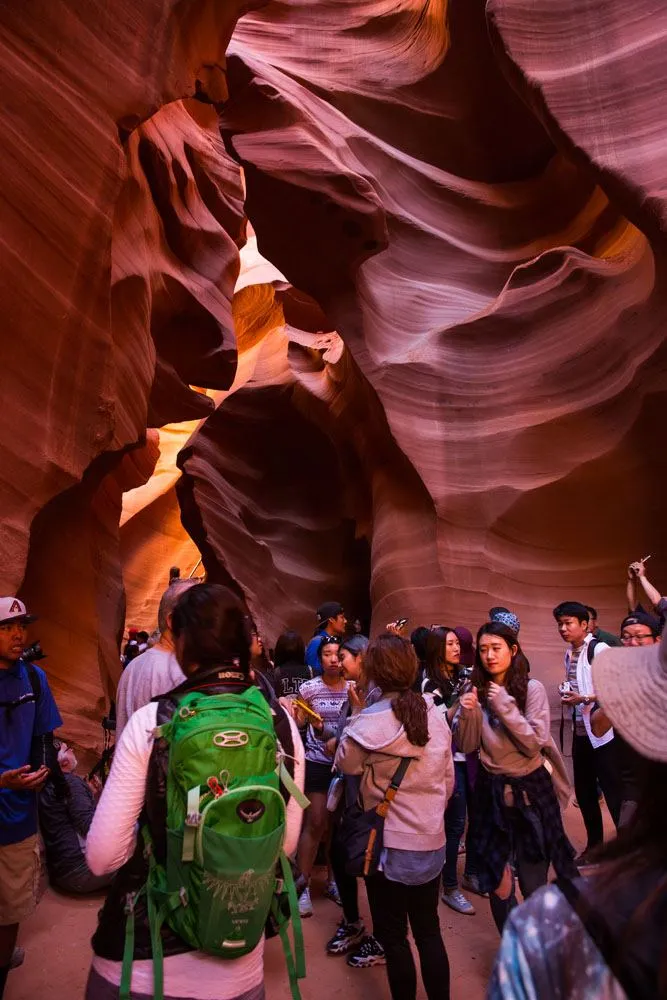
Crowds in Lower Antelope Canyon
So, Which One Do You Choose?
Choose Upper Antelope Canyon if:
- Seeing the light beams is important to you, because there is a better chance you will see them here
- You want the most iconic, recognizable Antelope Canyon photos
- Anyone in your group has mobility limitations, knee or back issues, or is uncomfortable with ladders
- You’re traveling with young children and want the easier, flatter terrain
- You’re claustrophobic: Upper’s wider floor and greater height make it the less confined experience
- This is a once-in-a-lifetime visit and you want the canyon most people mean when they say “Antelope Canyon”
Choose Lower Antelope Canyon if:
- You want a more physical, exploratory experience: the ladders and narrow passages are genuinely fun
- Budget is a consideration — Lower costs $30–$50+ less per person
- You couldn’t get a reservation at Upper for your dates
- You’re a photographer who wants vivid, saturated color rather than dramatic beams
- You prefer a slightly less frenetic booking process
Choose both if:
- You have a full day in Page. Visiting both back to back is absolutely doable and the experiences complement each other well enough that neither feels redundant
- You want to form your own opinion rather than take ours
If you have the time and budget, visiting both is the right answer. They’re different enough that visiting one doesn’t diminish the other, and the Navajo Nation will waive the $15 entry fee at the second canyon if you visit both on the same day, which softens the cost.
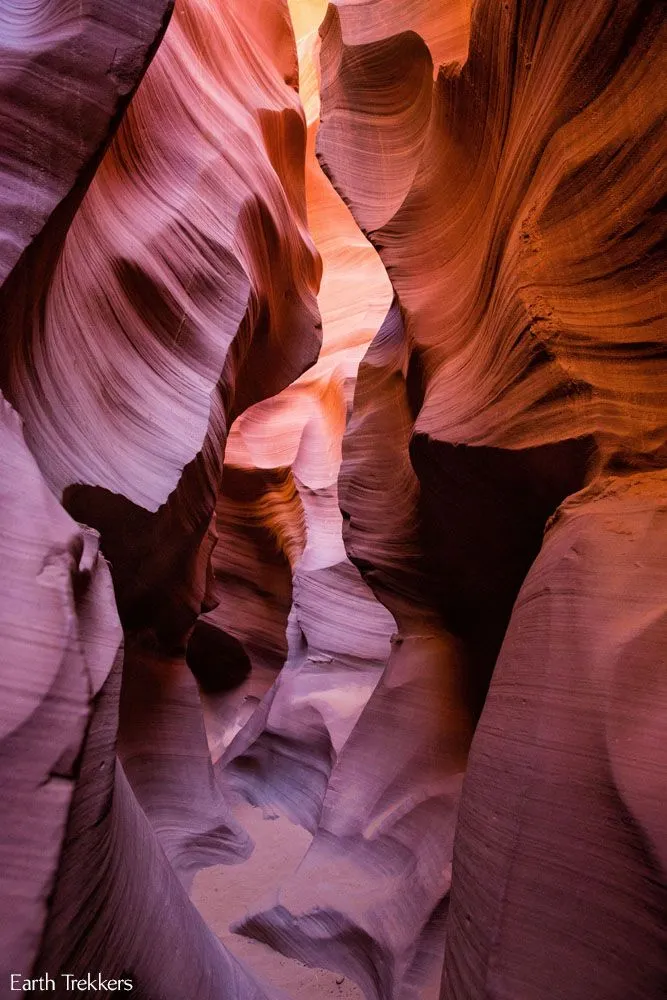
Lower Antelope Canyon
Can You Visit Both Upper and Lower Antelope Canyons on the Same Day?
Yes, and we recommend it if your schedule allows. Tim and I visited Upper and Lower on the same day in May 2017 and came away glad we hadn’t skipped either one. The entrances are about 7.5 miles apart, and with good timing the whole thing fits comfortably into a single day.
The Navajo fee waiver: If you visit both canyons on the same day, the Navajo Nation will waive the $15 entry fee at the second canyon. Hold onto your receipt from the first visit and present it at check-in for the second; they’ll refund the fee back to your card. It’s a small but worthwhile saving that most visitors don’t know about.
On timing: We’d suggest booking Upper Antelope Canyon first, ideally in the 10:30 am–noon window to catch the light beams, then Lower Antelope Canyon in the early afternoon. Factor in travel time between the sites, the truck ride out to Upper, and the walk to the Lower canyon entrance. A realistic full day looks something like: Upper at 10:30 am, a very quick lunch on the drive to Lower, and a tour at Lower at 1:30–2 pm.
PRO TRAVEL TIP: if you’re booking through different operators for each canyon, keep an eye on the time zone situation. The Navajo Nation observes Daylight Saving Time while the rest of Arizona does not. Your phone will adjust automatically as you cross in and out of Navajo land, which can create confusion if you’re not expecting it.
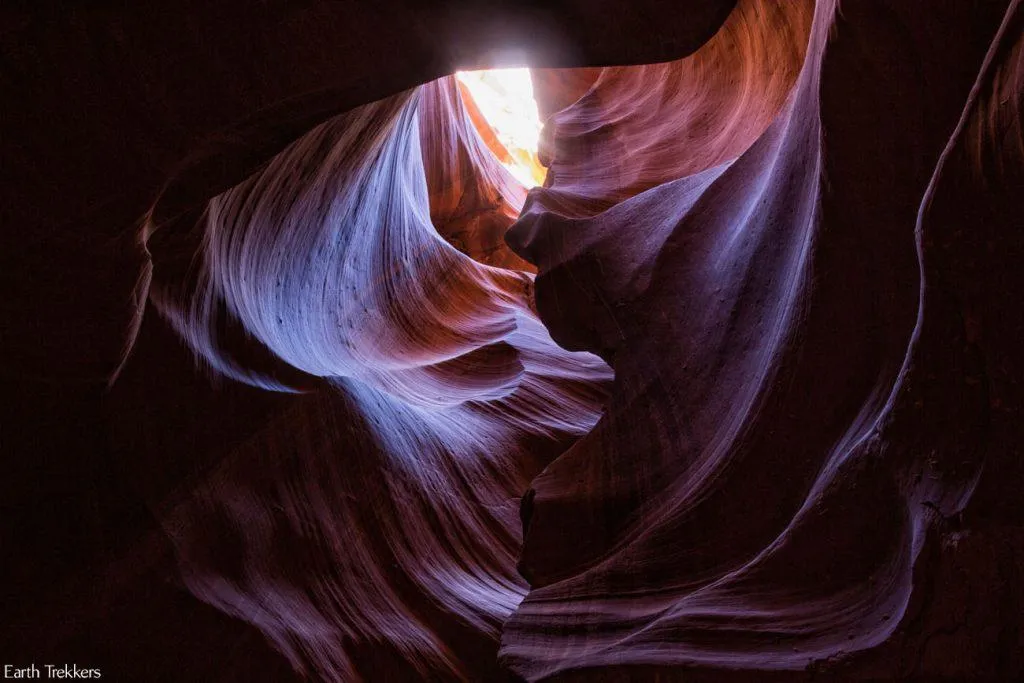
Upper Antelope Canyon
What About Canyon X?
Canyon X is a third slot canyon in the same sandstone system, located southeast of Lower Antelope Canyon near Page. It sees a fraction of the visitors that Upper and Lower receive, which makes it worth knowing about, either as an alternative if the main canyons are sold out, or as an addition if you want to see something genuinely less crowded.
The canyon gets its name from the X-shape formed where two slot canyon sections intersect, creating a distinctive open-sky view you won’t find at Upper or Lower. Tours are operated exclusively by Antelope Canyon X Tours, run in smaller groups than either of the main canyons, and generally feel more unhurried as a result. The photographic opportunities are excellent, though it lacks the famous light beams of Upper Antelope Canyon.
If Upper and Lower are both sold out for your dates, Canyon X is a strong alternative rather than a consolation prize. If you’re already visiting both main canyons and want to add a third, it pairs best with Lower given the proximity.
Frequently Asked Questions
Which is better, Upper or Lower Antelope Canyon?
It genuinely depends on what you’re looking for, which is why Tim and I came away with different answers after visiting both on the same day. Upper is more iconic and produces the famous light beams; Lower is more physical and exploratory with vivid colors and spiraling formations. If you can only pick one and light beams matter to you, choose Upper. If you want a more adventurous experience at a lower price, choose Lower.
Which Antelope Canyon is less crowded?
Both are busy during peak season, particularly midday. Upper has fewer tours per day but smaller, more controlled group sizes. Lower runs more frequently but can feel more congested in the narrow passages. Neither has a clear advantage, so visit early morning or late afternoon at either canyon to avoid the worst crowds.
Which is easier to visit?
Upper is easier. It’s a flat, ground-level walk-in with no ladders or significant physical demands. Lower requires descending and ascending a series of ladders and navigating narrow passages. For visitors with mobility limitations, knee or back issues, or young children, Upper is the right choice.
Is Lower Antelope Canyon cheaper?
Yes. Lower tours run approximately $70+ per person including the Navajo entry fee. Upper runs $100–$189 depending on the time slot, with midday slots commanding a premium.
Can you see light beams at Lower Antelope Canyon?
Occasionally, but they’re not reliable. We caught a few on our visit, but Lower’s V-shape allows more diffuse light in throughout the day rather than the dramatic concentrated beams Upper produces. If light beams are a priority, Upper is the only reliable option.
Which is better for photography?
Upper for light beams and iconic compositions; Lower for vivid color and spiraling formations. Upper was the more photogenic canyon for us overall, but Lower produces extraordinary shots when you work closely with your guide.
Which sells out faster?
Upper, by a significant margin. Midday slots at Upper can sell out three to six months in advance during peak season. Lower is more forgiving, though advance booking is still strongly recommended.
Tours of Antelope Canyon
You can also purchase entrance tickets through GetYourGuide to Upper Antelope Canyon, Lower Antelope Canyon, or Canyon X. I recommend doing this if tours are already booked for your dates of travel.
Tours & Tickets
Planning Your Visit
Once you’ve made your decision, our individual canyon guides cover everything you need to book and prepare. Our Upper Antelope Canyon guide covers tour companies, pricing, light beam timing, what to bring, and photography tips. Our Lower Antelope Canyon guide covers Ken’s Tours versus Dixie Ellis’, the ladder descent, crowd timing, and how to get the most out of the faster-paced tour format.
For broader Arizona trip planning, our Arizona Travel Guide is the best starting point for everything the state has to offer beyond Page. Most visitors to Antelope Canyon combine it with Horseshoe Bend and many continue to Monument Valley, about two hours east.
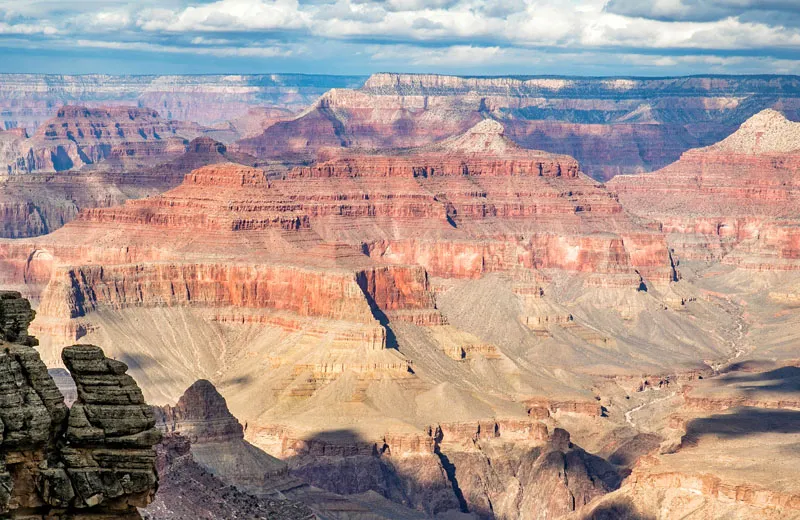
Heading further into Arizona, our Grand Canyon Travel Guide is the starting point for one of the world’s great natural wonders, and our Sedona Travel Guide covers hiking, restaurants, and things to do across one of the state’s most rewarding destinations.
So, which canyon will you choose? If you have visited Lower Antelope Canyon and Upper Antelope Canyon, which one was your favorite? Let us know in the comment section below.
More Information for Your Trip to Arizona
If this is part of a bigger road trip through the USA, visit our United States Travel Guide for more inspiration and travel planning tips.
Capturing the Action: How to Take Great Photos When Traveling
Pinterest Facebook Flipboard Traveling and photography go hand in hand. When you are in a new place and experiencing new things, it’s only normal that you would want to get that perfect photo, something to remember the moment by. I love photography. When I travel, one of the things I look forward to most is […]
How to Hike Zebra Slot Canyon in Grand Staircase-Escalante
Zebra Slot Canyon is a very short slot canyon, named for its striped canyon walls. It’s a gorgeous spot, maybe not quite as pretty as Antelope Canyon in Arizona, but since you can explore this on your own without a guide or tour group, it’s more fun. Hiking Zebra Slot Canyon can be a little […]
Boynton Canyon Trail & the Subway Cave | One of Sedona’s Top Hikes
Boynton Canyon is one of Sedona’s top hikes. This is a relatively easy hike, as you walk on a mostly flat trail that is sheltered from the sun. The trail ends at the back of the canyon, where a short climb takes you up to a viewpoint, offering sweeping views of Boynton Canyon. Along the […]
12 Best Sedona Hikes, Ranked Shortest to Longest
If you are looking for an epic hiking destination, it’s tough to beat Sedona, Arizona. With its red rock scenery, arches, hidden caves, and network of hiking trails, this is a great place to explore on foot. Add in the abundance of top-notch hotels and restaurants in Sedona and you have an awesome getaway destination, […]
Grand Canyon Road Trip: 5 Itineraries from Las Vegas
If you planning a trip to the Grand Canyon, there are many different ways to plan your perfect road trip, depending on how much time you have and your interests. The American Southwest is packed with stunning parks and landscapes, and it is easy to add on places like Antelope Canyon, Zion National Park, and […]
What to Expect on a Monument Valley Sunrise Tour
Are you considering a Monument Valley sunrise tour? If so, it is a great experience, but there are a few things to know before you go. You Must Take a Tour Monument Valley is located on the Utah-Arizona border not far from the Four Corners region. It is a Tribal Park owned and managed by the […]
15 Amazing Things to Do in Sedona (Beyond Just Hiking the Trails)
What do you look for when picking the perfect vacation spot? Outdoor adventures? Shopping? Wineries? Great restaurants? Beautiful sunsets? A fun place to take the kids? What if I told you that you could get all of these in one place…Sedona, Arizona. In this article, learn about the best things to do in Sedona with […]
Sedona Itinerary | Best Way to Spend 1 to 6 Days in Sedona
There are many different ways to piece together a Sedona itinerary. Your perfect itinerary depends on your traveling style. Whether you are an avid hiker, a family traveling with kids, or someone who wants to experience Sedona without spending time on the hiking trails, we have some great suggestions for you. In this guide, learn […]
The Ultimate Arizona Road Trip Itinerary
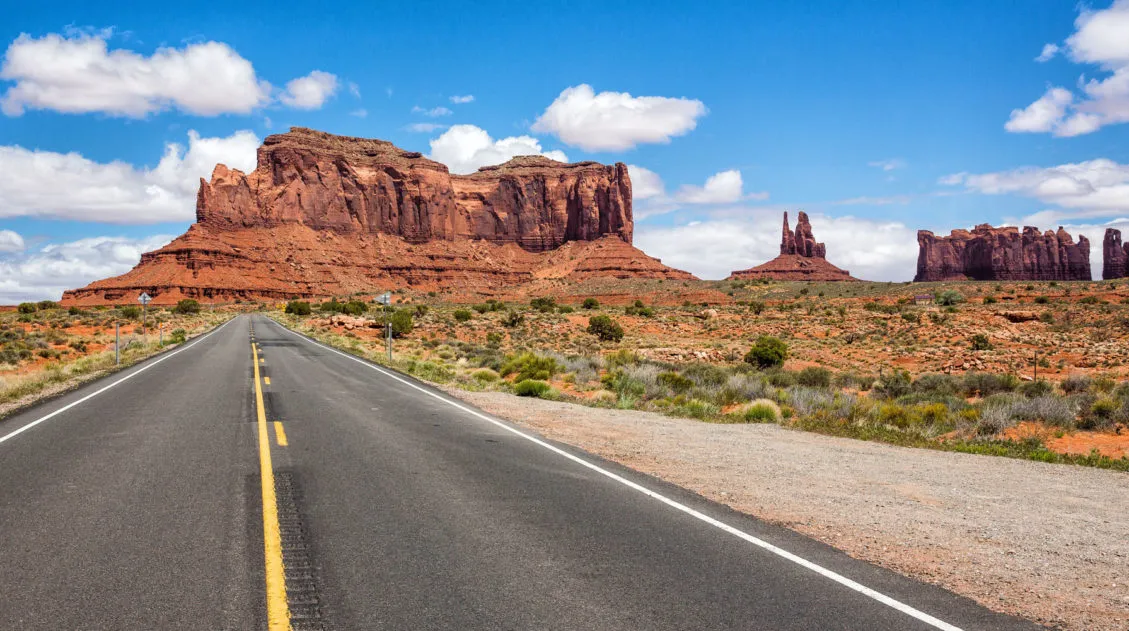
On this Arizona road trip itinerary, you will visit three national parks, drive past the buttes and mesas of Monument Valley, walk through magical Antelope Canyon, and hike the desert hills of Sedona. Arizona is home to some of the most iconic landscapes in the United States and this road trip is the perfect way […]
10 Amazing Slot Canyons to Explore in the American Southwest
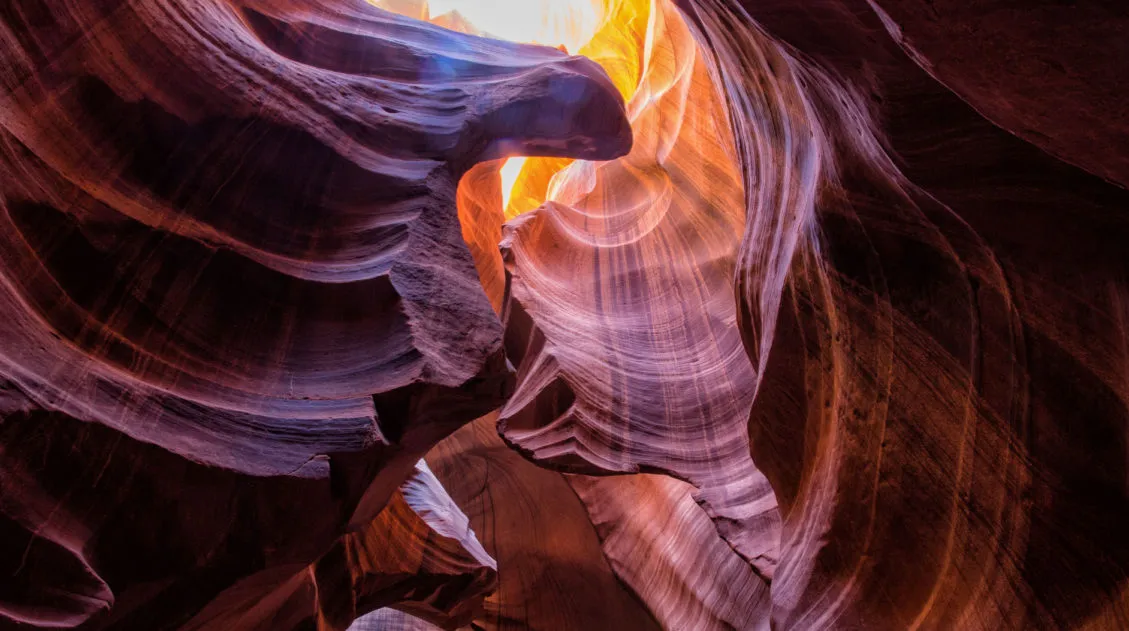
The American Southwest is a playground for hikers, photographers, and adventurers. Fun to explore and extremely photogenic, slot canyons provide a unique hiking experience. We have assembled a short list of some of the best slot canyons in Utah, Arizona, and Nevada. This is not an all-inclusive list, because there are tons of slot canyons […]
Petrified Forest National Park: Travel Guide & Itinerary
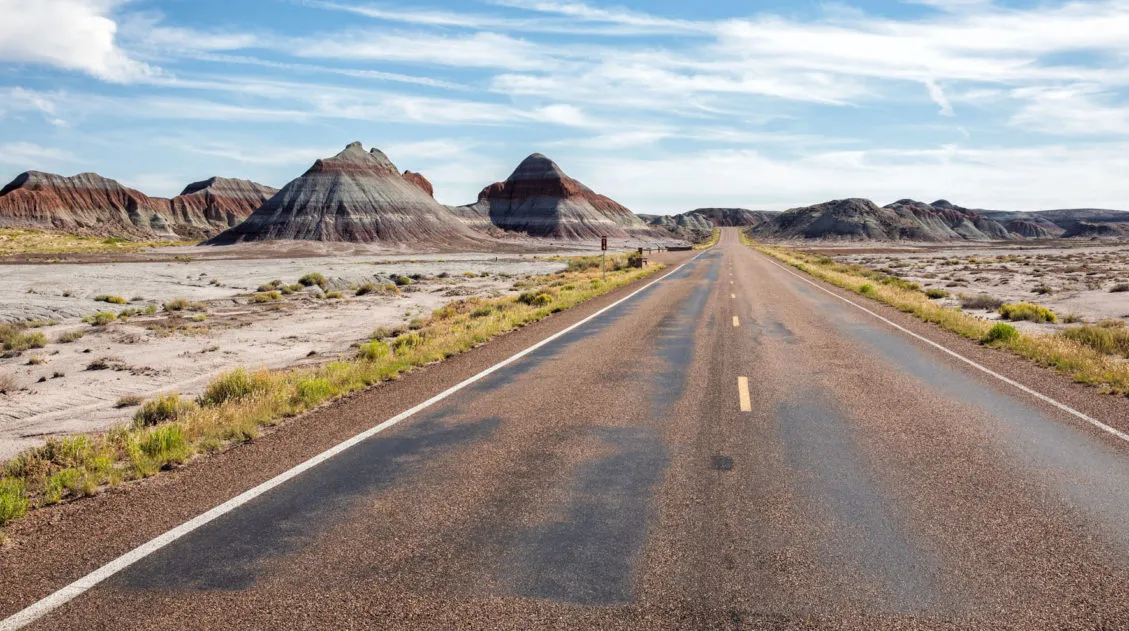
Petrified Forest National Park beat all of my expectations. I imagined a barren desert with a few colorful hills, some ancient, petrified stumps, and soaring temperatures in the early summer. Instead, we were treated to the colorful, uniquely beautiful hills of the Painted Desert, giant, petrified trees that puzzle the mind, and the chance to […]

Comments 84