
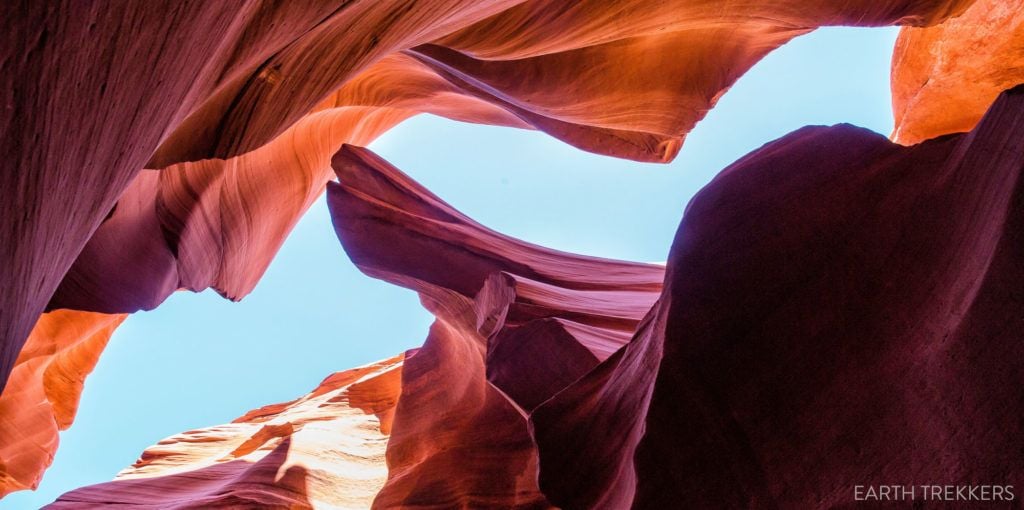

Lower Antelope Canyon lives in the shadow of its more famous neighbor up the road, but Tim would argue it shouldn’t. When we visited both canyons on the same day, Upper was my favorite and Lower was his, and we’ve never quite agreed on which one wins.
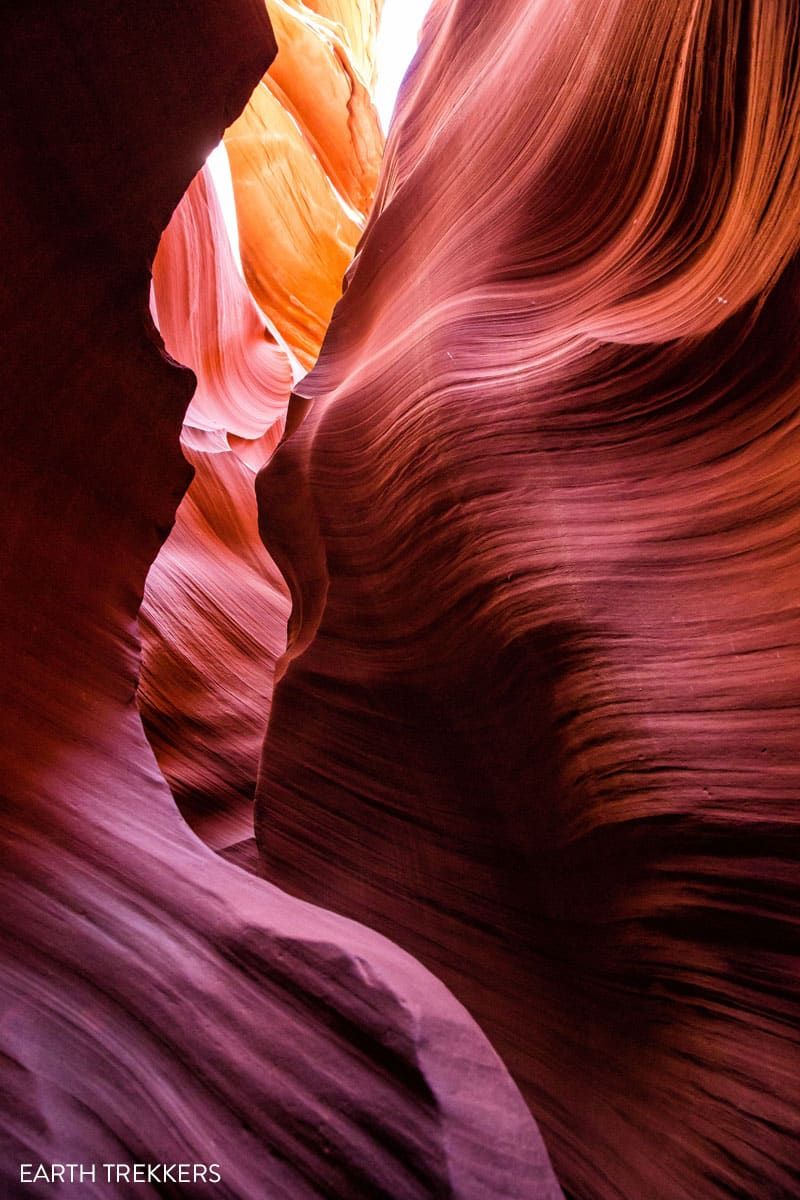
What makes Lower different is hard to describe until you’re inside it. Where Upper opens up around you, Lower pulls you in. The passageways narrow, the walls spiral in tight formations above your head, and you descend into the canyon rather than walking into it. Its ladders take you down into an underground world that feels genuinely unlike anything else. The colors are vivid and constantly shifting as the sun moves across the narrow opening above.
We took the General Tour with Ken’s Tours. Crowds were manageable at that hour, though we waited about 10 to 15 minutes to enter the canyon, and once inside, the guides kept us moving at a steady pace to avoid bottlenecks. It felt slightly rushed, though the canyon itself more than made up for it. Tim, for the record, was completely won over.
At a Glance: Lower Antelope Canyon
LOCATION | Page, Arizona (Navajo Nation land)
ACCESS | Guided tour only
TOUR DURATION | ~1 hour inside (General Tour)
COST | ~$70+ per person for the General Tour, including the $15 Navajo entry fee
BOOK IN ADVANCE | Recommended, especially for peak season (March–October)
DIFFICULTY | Moderate — requires descending and ascending ladders
PHOTOGRAPHY | Handheld only — no tripods, monopods, or selfie sticks
CLAUSTROPHOBIA NOTE | The canyon gets very narrow in places — worth considering if you’re sensitive to tight spaces
What is Lower Antelope Canyon?
Lower Antelope Canyon is a slot canyon carved into the Navajo sandstone just outside Page, Arizona, on Navajo Nation land. Its Navajo name is Hasdeztwazi, meaning “Spiral Rock Arches,” a name that captures its character well.
The canyon is V-shaped, narrow at the base and gradually widening toward the sky, which allows more diffuse light to filter in throughout the day. This makes it brighter and more colorful than Upper in many conditions. The canyon runs approximately 600 yards, making it longer than Upper Antelope Canyon, and accessing it requires descending a series of ladders and navigating some narrow passages and small boulders along the way.
Lower Antelope Canyon sits within the Lake Powell Navajo Tribal Park and was shaped over millions of years by flash floods forcing water through cracks in the sandstone.
All visits must be made with an authorized Navajo guide. This is both tribal law and a genuine safety requirement given the flash flood risk that the canyon’s formation makes clear.
How to Book a Tour
Lower Antelope Canyon can only be visited with an authorized Navajo tour operator; independent access is not permitted.
There are two operators at Lower Antelope Canyon: Ken’s Tours and Dixie Ellis’ Lower Antelope Canyon Tours. Both run tours throughout the day from roughly 7 am to 5 pm, with departures approximately every 30 minutes.
Book in advance, but Lower is more forgiving than Upper. Tours here don’t sell out as far ahead as Upper Antelope Canyon, and same-day availability is occasionally possible, particularly on weekdays and during the off-season. That said, peak season weekends and midday slots fill quickly, and showing up without a reservation during summer is a gamble. Book ahead whenever you can.
An important difference from Upper: there is no transportation provided at Lower Antelope Canyon. You drive yourself to the canyon entrance, located on Indian Route 222 directly off Highway 98, about 3 miles east of Page. Both Ken’s Tours and Dixie Ellis’ check-in booths are located at the canyon entrance, so there’s no need to start anywhere in town. Parking is available on site.
Arrive 30 minutes before your tour time to check in. Tours run on a tight schedule to manage the flow of groups through the canyon, and late arrivals can lose their spot.
The DST reminder applies here: the Navajo Nation observes Daylight Saving Time while the rest of Arizona does not. Double-check local Page time when planning your arrival, especially during summer months.
Tour Companies
Only two operators run tours at Lower Antelope Canyon. The guides’ knowledge and personality will vary individual to individual, but choosing between Ken’s Tours and Dixie Ellis’ comes down mainly to availability and which one you can get a reservation with.
We toured with Ken’s Tours and had a good experience. Our guide kept a brisk pace given the crowds, but was knowledgeable and helpful with photography. Ken’s Tours has operated since 1994 and is located directly at the canyon entrance, which means no additional travel once you arrive on site. Groups are capped at around 10 people for the General Tour, which keeps things manageable.
- Ken’s Tours — the original Lower Antelope Canyon operator, family-owned and Navajo-operated since 1994; offers General Tours, a Deluxe Tour that includes a visit to the Hózhǫ́ Haz’ą́ Heritage Center and a traditional meal, and Combination Packages with other Page-area experiences
- Dixie Ellis’ Lower Antelope Canyon Tours — operated by Kenneth Young’s sister; equally well-reviewed, with guides praised for their cultural knowledge and photography tips; offers refunds up to 24 hours before departure, which is more flexible than most operators in the area
If your priority operator is sold out, book the other without hesitation; you won’t be shortchanged on the experience.
Tour Pricing
Lower Antelope Canyon is noticeably cheaper than Upper, which is one reason it has grown in popularity over the years. Here’s how the pricing breaks down.
Navajo entry fee: There is a $15 per person entry fee. Some operators include this in their listed price; others add it separately, so check before booking.
General Tour: Ken’s Tours charges $55 for the standard one-hour canyon tour, putting the total at approximately $70+ per person once the Navajo entry fee and taxes are factored in. Dixie Ellis’ pricing is comparable.
Deluxe Tour: Ken’s Tours offers a more immersive 75–90 minute experience at $135, which includes the General Tour plus a visit to the Hózhǫ́ Haz’ą́ Heritage Center and a traditional Native American meal. It’s a meaningful step up if you want deeper cultural context beyond the canyon itself.
Combination Packages: Ken’s Tours offers half-day, full-day, and two-day packages from $170+ that combine Lower Antelope Canyon with other Page-area experiences including Lake Powell boat excursions, horseback riding, and more.
Tipping your guide: As with Upper, tips are customary and appreciated. $10–$15 in cash is appropriate, and most guides also accept Venmo.
Refund policy: Most operators have strict no-refund policies. Dixie Ellis’ is an exception, offering full refunds up to 24 hours before your tour, which is worth factoring in if your plans are uncertain.
Booking through GetYourGuide
If Ken’s Tours and Dixie Ellis’ are both sold out for your dates, or if you’d prefer to compare and book through a single platform, GetYourGuide lists Lower Antelope Canyon tours with real-time availability. It’s also a good option if you’re looking to bundle Lower with Upper Antelope Canyon or Horseshoe Bend into a single booking.
Antelope Canyon Tours
Purchase your ticket through GetYourGuide and check real-time availability below:
What to Expect on Your Tour
Getting there: The canyon entrance is on Indian Route 222, directly off Highway 98, about 3 miles east of Page. Parking is available on site. Follow signs for Lower Antelope Canyon. Both Ken’s Tours and Dixie Ellis’ check-in booths are located right there.
Check-in: After checking in, you’ll walk to the entrance of the canyon with your tour group. We waited about 10 to 15 minutes to enter the canyon on our May morning tour, but during peak midday hours in summer, the queue at the canyon entrance can be significantly longer — factor this into your timing and bring water for the wait, which is in the sun.
Descending into the canyon: The first thing that distinguishes Lower from Upper is the entry: a series of ladders takes you down into the canyon rather than walking in at ground level.
Inside the canyon: Once you’re in, the walls close around you in spiraling formations of deep red, orange, and purple sandstone. The canyon is V-shaped, with colors shifting constantly as the sun moves overhead. Your guide will point out formations, share Navajo cultural stories, and help you find the best angles for photos. The pace is steady, because guides keep groups moving to prevent bottlenecks, so stay attentive and shoot as you go rather than lingering too long at any one spot.
The exit: The tour exits at the far end of the canyon, with ladders bringing you back up to ground level before you walk back to the check-in area. The total experience from check-in to return runs approximately 60 minutes for the General Tour.
Lower Antelope Canyon Photos
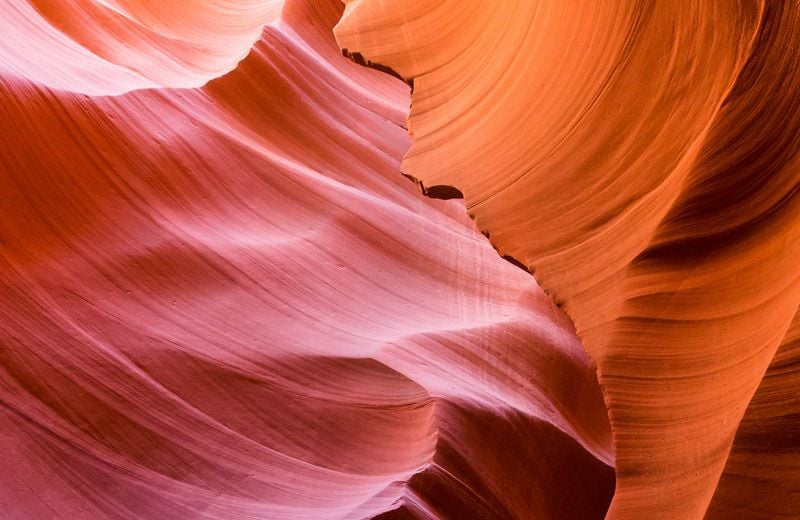
The photos below are from our May 2017 visit on the General Tour. What they capture well is the color, the deep, saturated reds and oranges that characterize Lower more than Upper.
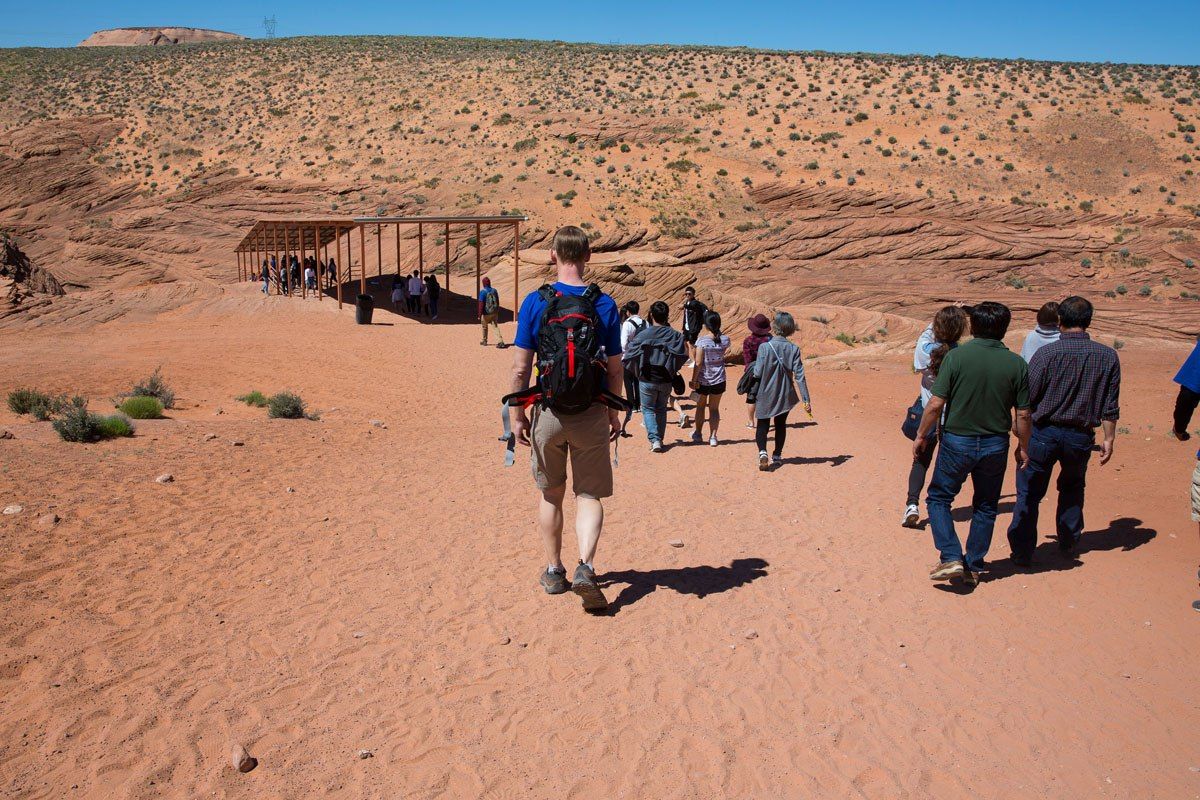
Walking to the entrance of the canyon.
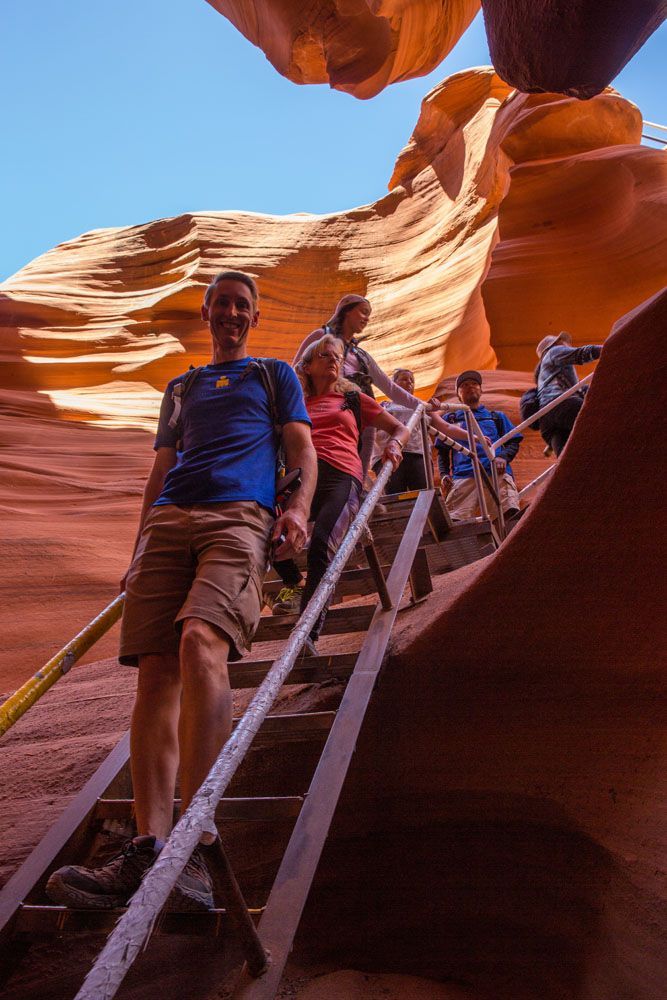
From the very start, the views are amazing.
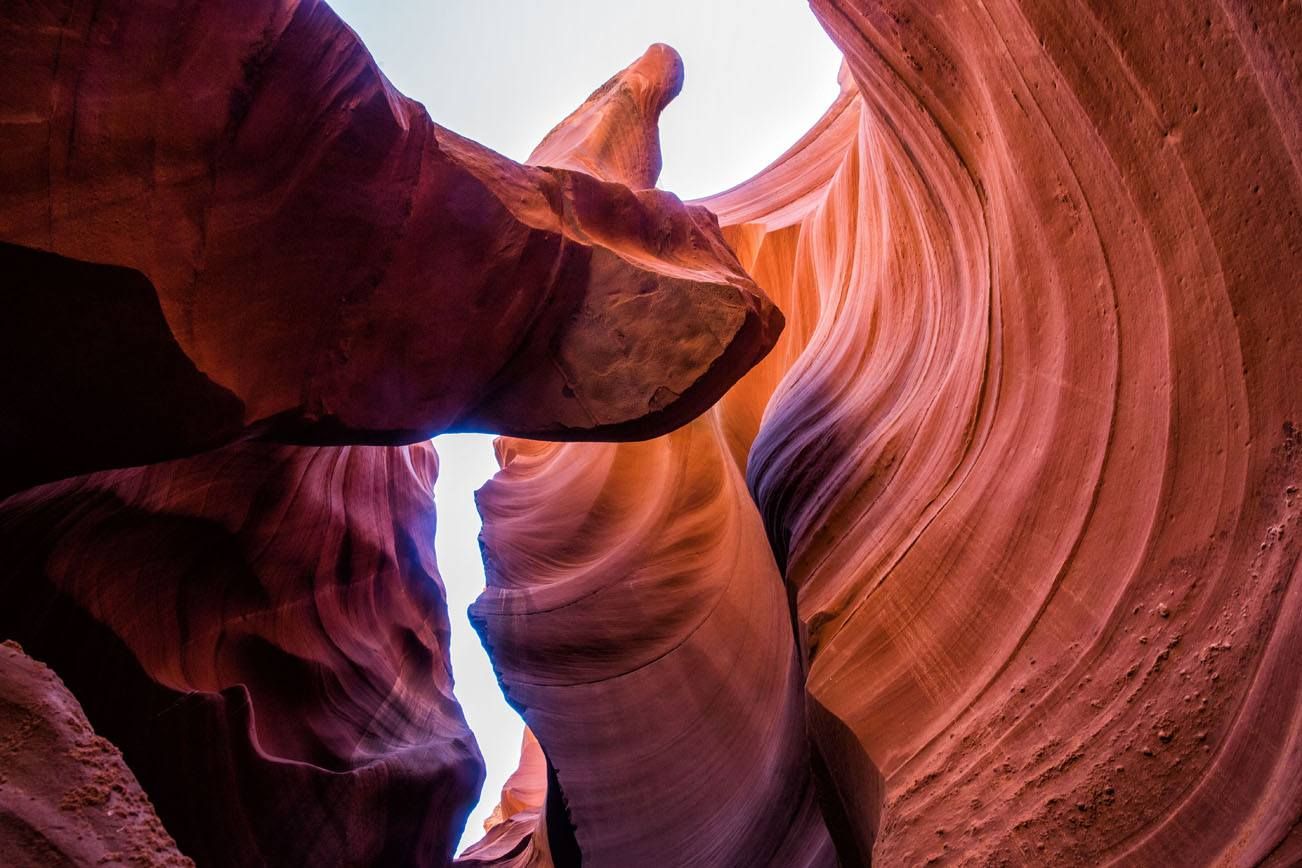
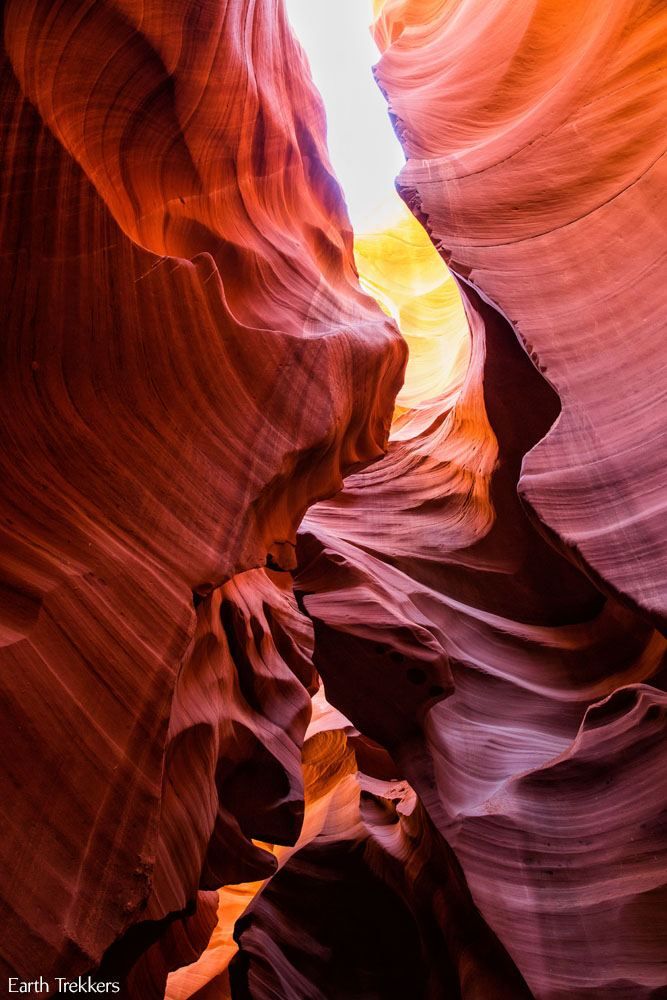
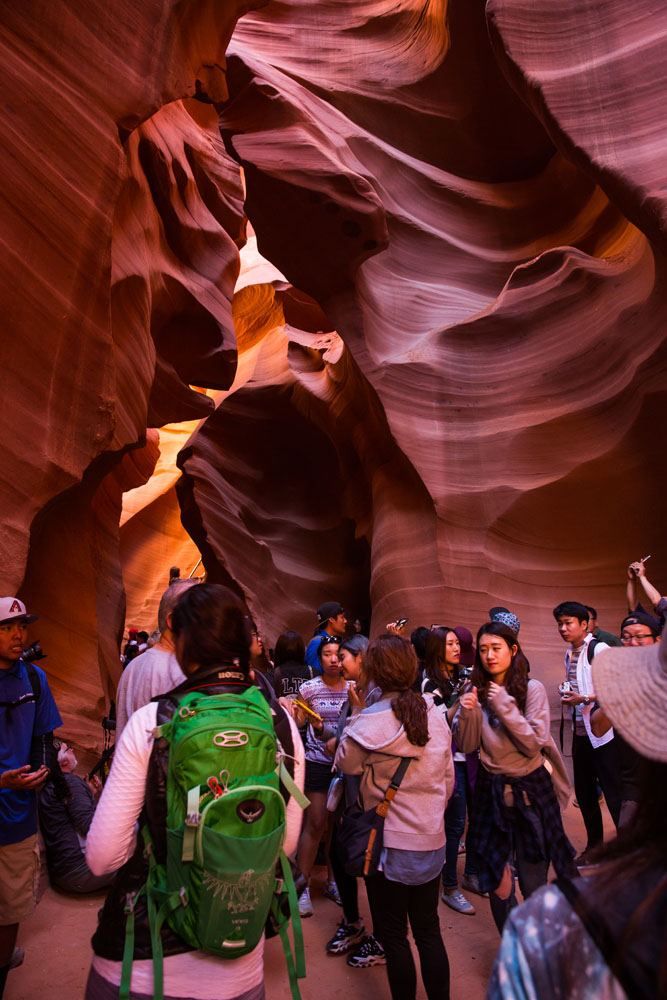
Touring the canyon with a large group of people is almost unavoidable, especially during peak hours.
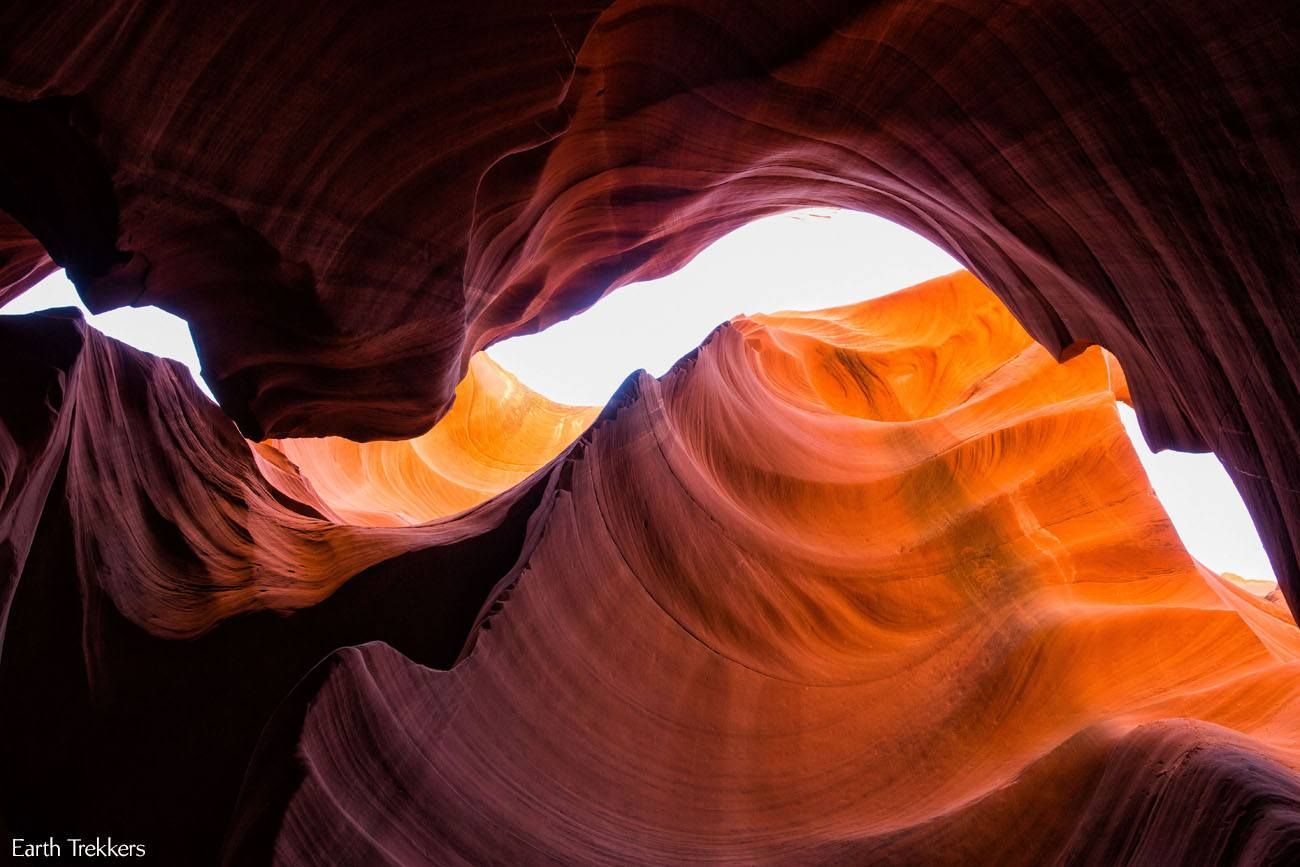
Just don’t forget to look up.
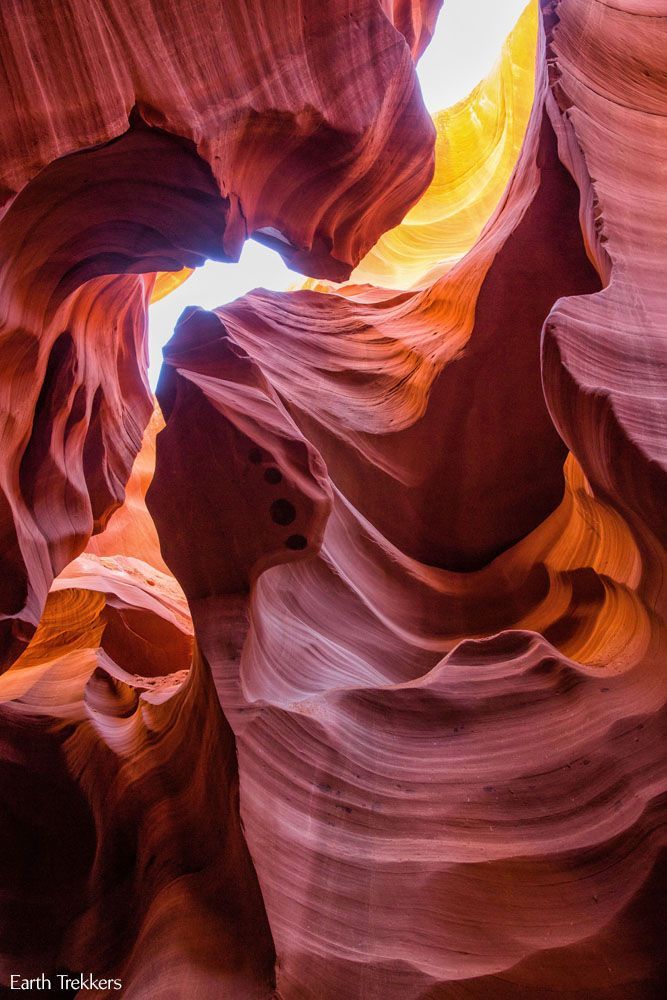
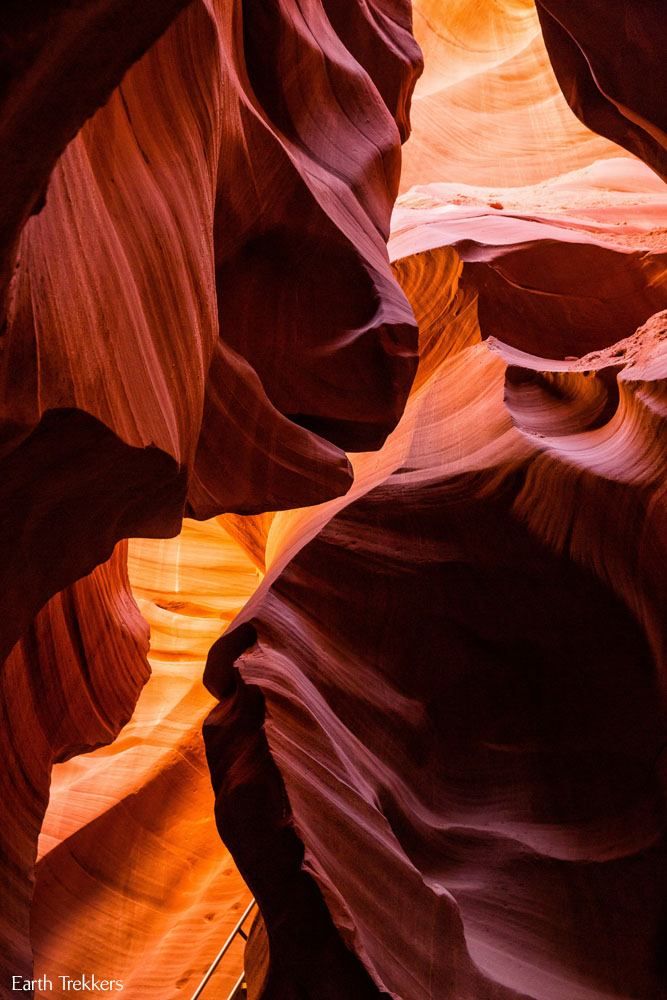
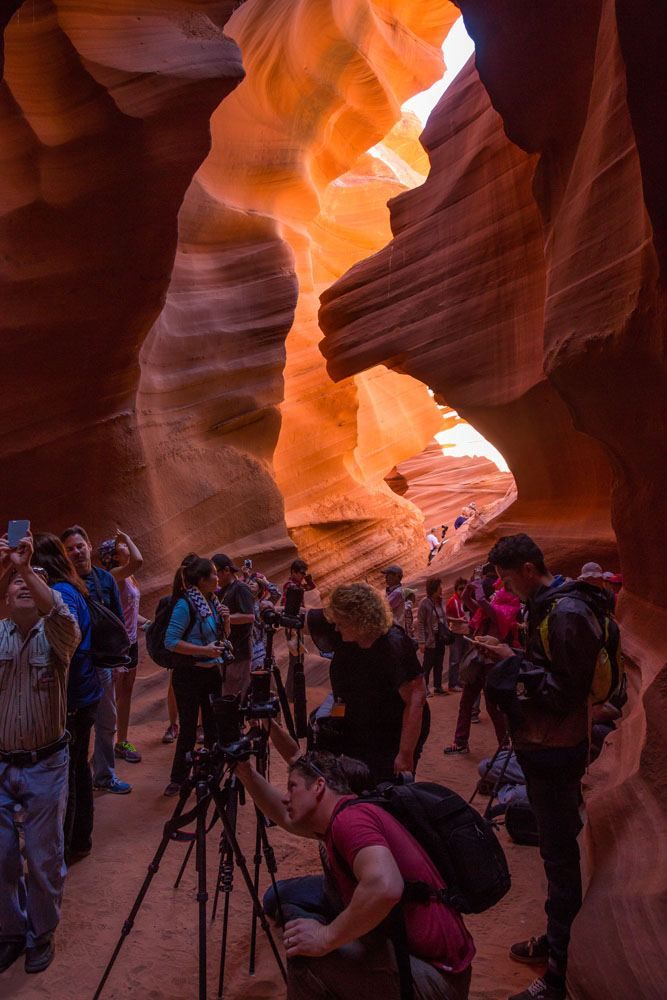
A photography tour of the canyon. Photography tours are no longer offered in Lower Antelope Canyon.
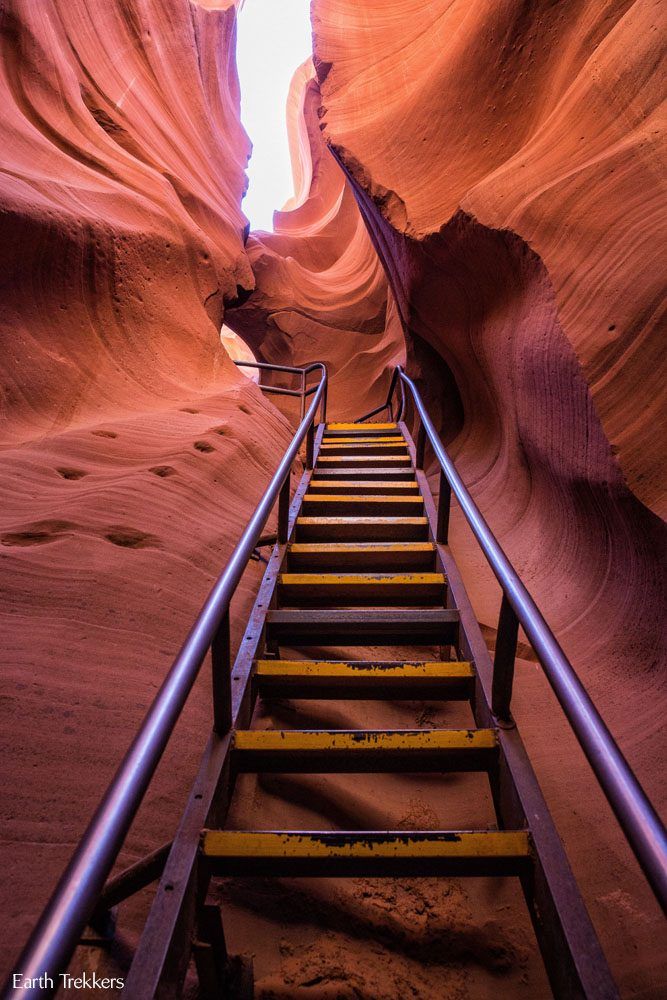
Here are one of several ladders to climb.
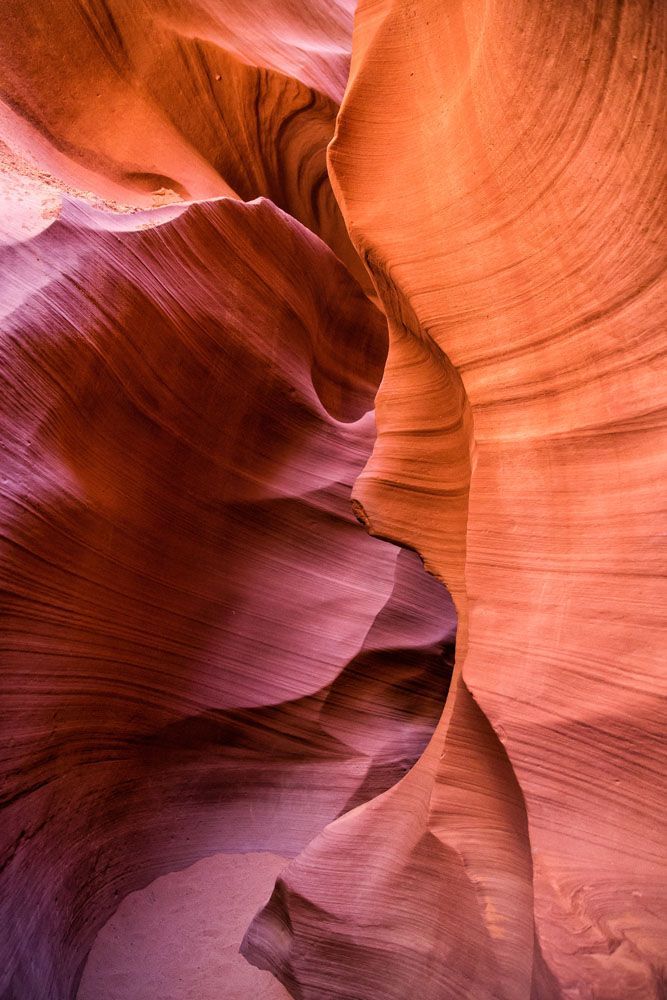
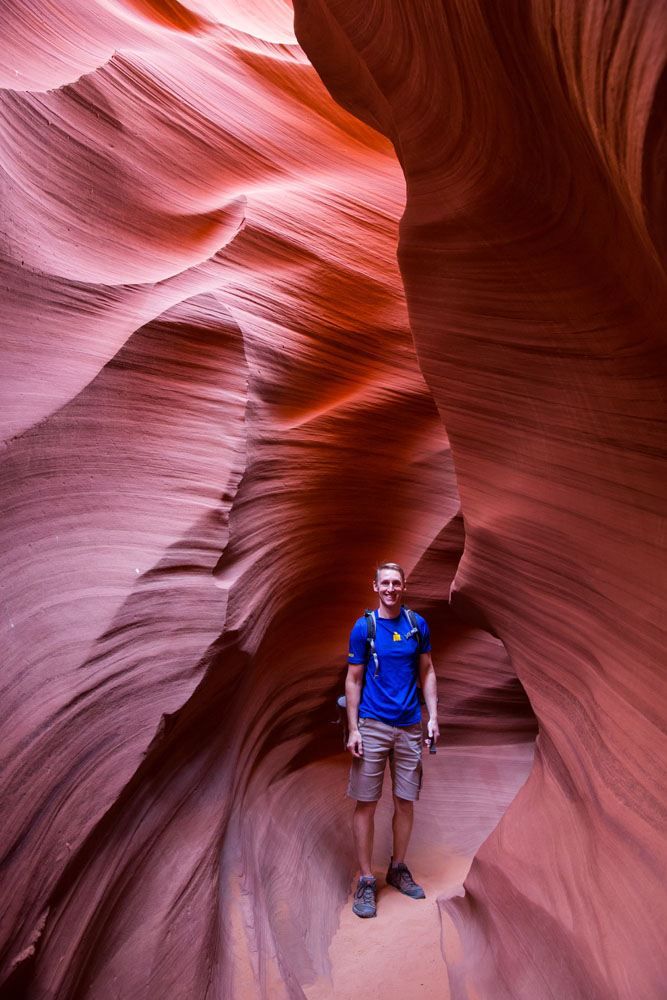
At times, the canyon gets very narrow. For some, that can be fun. If you suffer from claustrophobia, maybe not so fun.
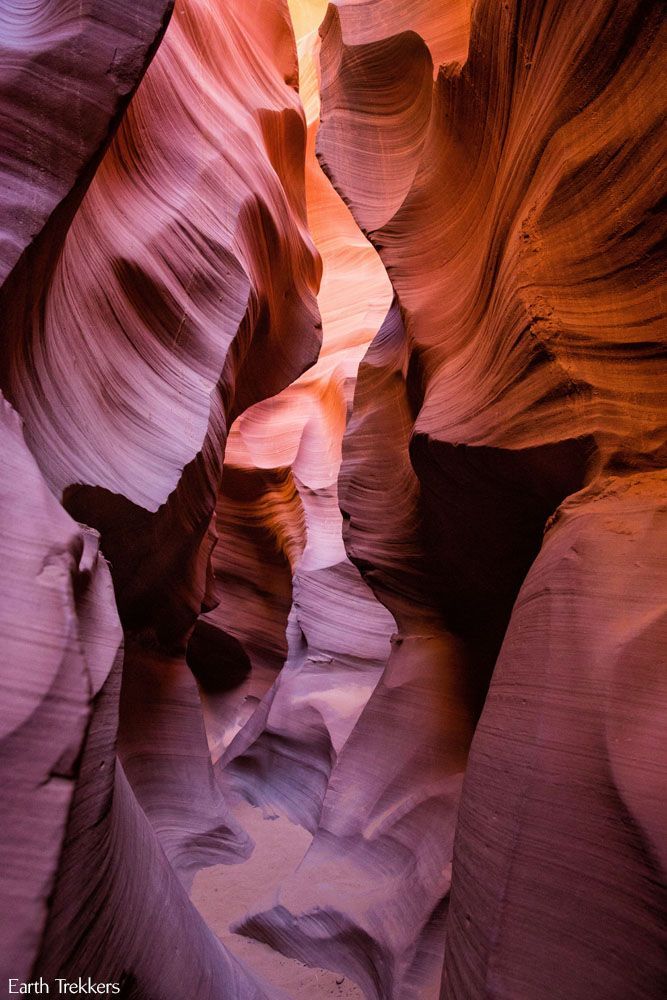
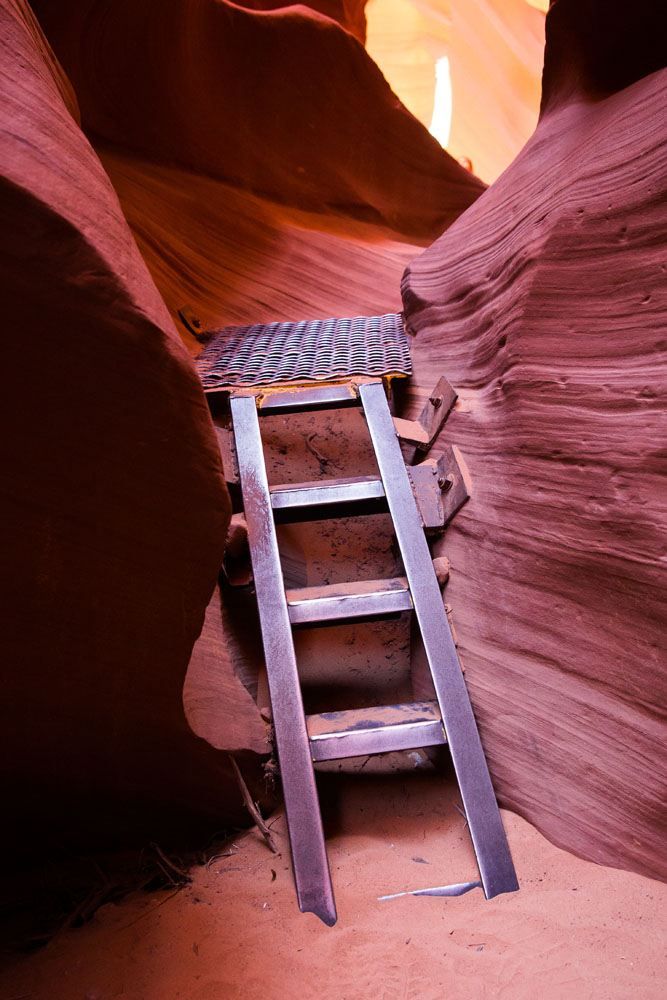
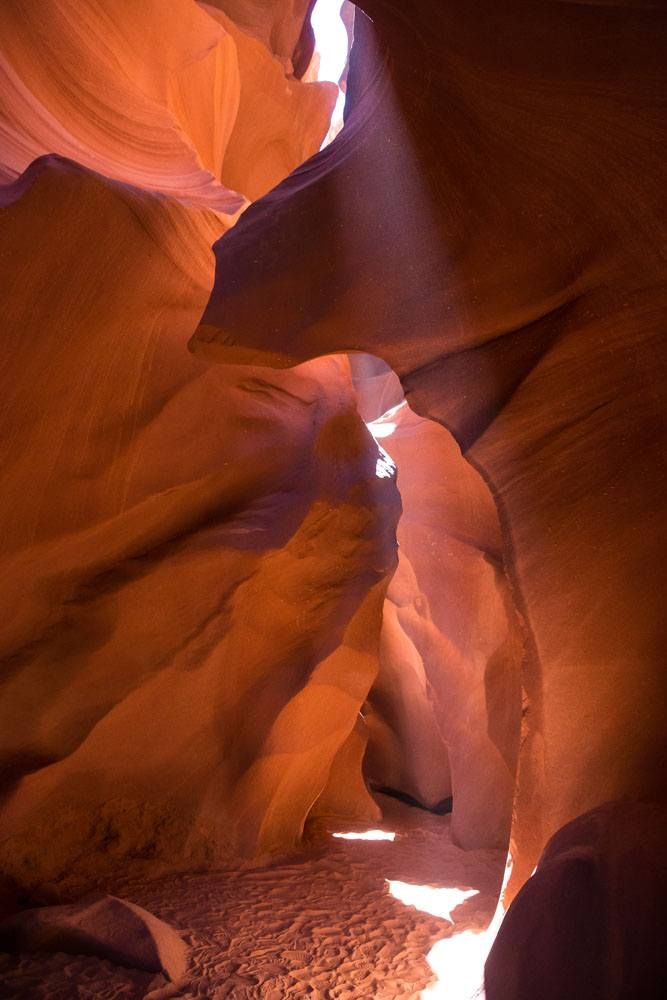
We did get lucky and saw a few light beams.
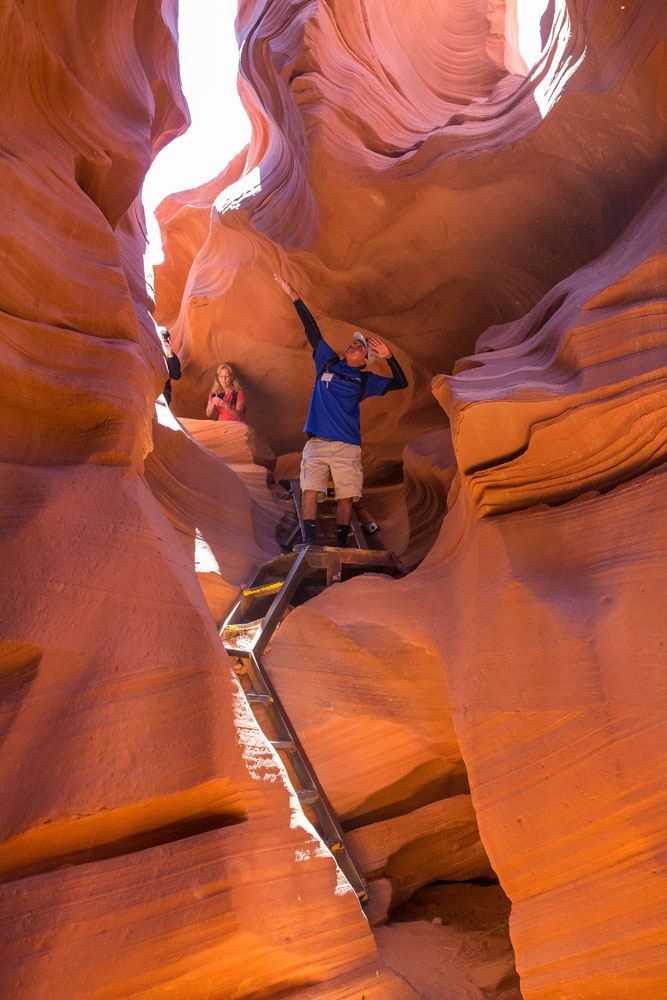
Our guide, Boo, and the last ladders of Lower Antelope Canyon.
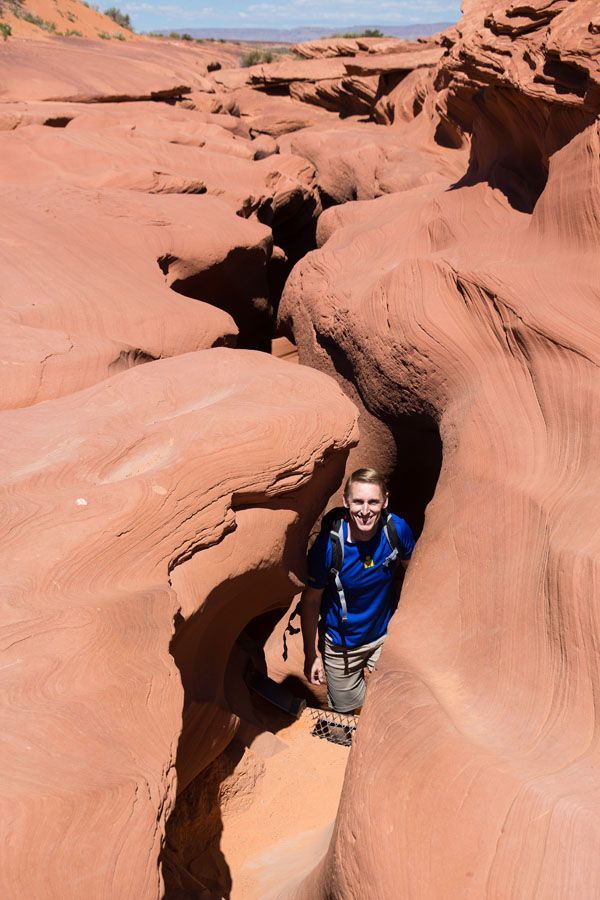
Photography Tips
Lower Antelope Canyon rewards photographers who are prepared to shoot quickly and adapt.The pace is faster than Upper, the passages are narrower, and you’ll have less time to compose at any given spot. Here’s how to make the most of it.
Follow your guide’s lead. The same advice applies here as at Upper: your Navajo guide knows where the best light falls and when, and will steer you toward the strongest compositions. Let them position you rather than wandering independently.
Shoot the colors, not just the light. The dramatic light beams of Upper Antelope Canyon aren’t the main event here. What Lower does exceptionally well is color. The walls shift from deep rust to soft purple depending on where you are and what the light is doing. Let that be your focus.
Look up. The V-shape of the canyon means the sky is visible as a narrow sliver above you for much of the tour. Some of the strongest shots here combine the spiraling walls with that strip of blue or grey overhead.
Be ready to shoot as you move. The guides keep groups moving at a steady pace to avoid bottlenecks. Unlike Upper, you won’t always have the luxury of pausing for a long composition. Keep your camera or phone accessible and shoot as you go.
Turn your flash off. The flash flattens the color completely. Keep it off for the entire tour.
For more on the gear we use to capture shots like these, visit our Travel Photography Gear Guide.
Best Time to Visit Lower Antelope Canyon
We visited on a morning tour in May, arriving at 10:20 am. The light inside was excellent, vivid and warm, though we were already waiting in a queue before we could enter, which gives you a sense of how quickly things fill up even at that hour.
The crowd situation at Lower has changed significantly since we visited. What was once the quieter alternative to Upper Antelope Canyon is now equally busy during peak season. If avoiding crowds is a priority, the same logic applies: visit early morning or late afternoon, aim for weekdays over weekends, and consider the shoulder months over summer.
The monsoon season risk (July–September) is worth taking seriously here too. It was Lower Antelope Canyon where the 1997 flash flood occurred. Tour operators monitor conditions and cancel when necessary, but summer visitors should factor in the possibility of disruption.
- Spring (March–May): Excellent light, building crowds, ideal weather — one of the best windows to visit
- Summer (June–August): Peak crowds and prices, hot temperatures outside the canyon, monsoon flood risk — book well ahead if visiting
- Fall (September–October): Crowds beginning to thin, comfortable temperatures, still beautiful light — a strong alternative to summer
- Winter (November–February): Fewest crowds, lowest prices, the colors inside the canyon remain stunning — best if you want a quieter, more unhurried experience
Is Lower Antelope Canyon Worth It?
Yes. Lower Antelope Canyon is a genuinely different experience from Upper. The descent into the canyon, the narrowing passages, the spiraling formations that seem almost sculptural up close, none of it is adequately conveyed by photos. We went in expecting it to feel like the second-tier option and came out some of our favorite photos of the American Southwest.
The honest caveats: the pace is faster than you might want, especially during peak hours when guides keep groups moving to manage the flow. We felt slightly rushed on our tour, which wasn’t a complaint about the canyon, just a reality of how popular it’s become. If you go in knowing that, you can adjust your approach: shoot as you move, stay close to your guide, and don’t spend too long at any one spot waiting for the perfect composition.
The cost is lower than Upper Antelope Canyon, which makes it easier to recommend. At roughly $70 per person for the General Tour, it’s one of the better overall value.
If you’re trying to decide between Upper and Lower, read our full comparison before you book. They’re different enough that the choice genuinely depends on what you’re looking for. If you have time to do both, do both. We visited them back-to-back on the same day and came away glad we hadn’t skipped either one.
What to Bring and What to Leave Behind
Bring:
- Sturdy closed-toe shoes with good traction — the 10-minute walk to the canyon entrance is on rocky, sandy Navajo sandstone, and the ladders inside require a secure footing
- A hat and sunscreen — the walk to the entrance is exposed; apply before you leave the car
- Layers — the canyon runs cooler than the desert air outside
- One water bottle — the only food or drink permitted inside
- A fully charged phone or camera — your guide will help you find the best shots
- Cash or Venmo for your guide’s tip
- Glasses instead of contacts if possible — sand and dust are present, particularly on windier days
Leave Behind:
- Bags of any kind — backpacks, fanny packs, and purses are strictly prohibited inside the canyon
- Tripods, monopods, and selfie sticks — not permitted
- Food and beverages — other than your one water bottle, nothing else is allowed
- Strollers — not compatible with the ladders and terrain
One note on claustrophobia: the canyon narrows significantly in places, more so than Upper Antelope Canyon. If you or anyone in your group is sensitive to tight spaces, it’s worth knowing this before you commit to the tour.
Flash Flood Safety
Lower Antelope Canyon is where flash flooding has proven to be deadly. The 1997 flood that killed eleven people happened here, on a day that appeared clear at the canyon entrance.
A storm upstream is all it takes; water can move through the narrow channel within minutes with almost no warning at ground level. This is the most important reason guided access is mandatory. Your Navajo guide monitors conditions, stays in contact with local forecasters, and will cancel or evacuate tours if anything looks unsafe. If evacuation is called, move immediately.
Risk is highest during monsoon season (July–September). Cancellations for safety reasons are more common during this window, and refunds are typically not offered. Plan accordingly.
Frequently Asked Questions
Do I need to book Lower Antelope Canyon in advance?
Yes, especially for peak season weekends and midday slots. Same-day availability is occasionally possible on weekdays and during the off-season. Don’t count on it during summer.
Is Lower Antelope Canyon harder to visit than Upper?
Yes, physically. Lower requires descending and ascending a series of ladders and navigating some narrow passages and small boulders. Upper is essentially flat. If anyone in your group has mobility limitations, knee or back issues, or is uncomfortable with heights or tight spaces, Upper is the better choice.
Can you see light beams at Lower Antelope Canyon?
Occasionally, but they’re not reliable here the way they are at Upper. We got lucky on our visit and caught a few, but the vivid colors and spiraling formations are the main draw at Lower, not the beams.
Is Lower Antelope Canyon good for kids?
Most children handle it well, but the ladders and narrow passages require some physical confidence. Toddlers in backpack carriers are permitted, though the low rock ledges can make it awkward. Strollers are not compatible with the terrain.
Is Lower Antelope Canyon suitable for people with limited mobility?
No. The ladders, stairs, and uneven terrain make it inaccessible for anyone who cannot climb independently. Upper Antelope Canyon is the significantly more accessible option.
Is Upper or Lower Antelope Canyon better?
It genuinely depends on what you’re looking for. They’re different experiences, not versions of the same one. Read our full comparison to help you decide, or visit both if your schedule allows.
Can I visit both Upper and Lower Antelope Canyon on the same day?
Yes, and many visitors do. The entrances are about 7.5 miles apart. If you visit Upper first, hold onto your Navajo entry fee receipt because Lower Antelope Canyon will waive the $15 fee if you can show proof of same-day payment at the other canyon.
Planning Your Arizona Trip
Most visitors combine Lower Antelope Canyon with Upper Antelope Canyon and Horseshoe Bend on the same day because all three are within a few miles of each other. If you’re deciding between the two canyons, our Upper vs. Lower Antelope Canyon comparison walks through the key differences to help you choose. If you have time for both, our Upper Antelope Canyon guide covers everything you need to plan that visit.
From Page, Monument Valley is roughly two hours east and our guide to Monument Valley covers everything for a first visit. Continuing south, our Grand Canyon National Park Travel Guide is the starting point for one of the world’s great natural wonders, and our Sedona Travel Guide covers hiking, restaurants, and things to do across one of Arizona’s most rewarding destinations.
For a full overview of what to see and do across the state, our Arizona Travel Guide is the best starting point for planning time in Arizona beyond Page.
Do you have any questions about how to visit Lower Antelope Canyon? Let us know in the comment section below.
Explore More of the American Southwest
If this is part of a bigger road trip through the USA, visit our United States Travel Guide for more inspiration and travel planning tips.
Two Week American Southwest Road Trip: Grand Canyon & Utah’s Mighty 5
Pinterest Facebook Flipboard This is one of the best road trips in the USA. On this American Southwest road trip, you will visit Utah’s Mighty 5, the Grand Canyon, and a handful of wonderful state parks and national monuments. This is the itinerary I wish we had when we planned our first road trip to […]
11 EPIC Things to Do on the South Rim of the Grand Canyon
For millions of years, the Colorado River has carved its way through the Colorado Plateau, forming this expansive, awe-inspiring landscape that we call the Grand Canyon. And it certainly is grand. Words cannot describe what it is like to gaze across the Grand Canyon for the first time. On a visit to the Grand Canyon, […]
12 Best Sedona Hikes, Ranked Shortest to Longest
If you are looking for an epic hiking destination, it’s tough to beat Sedona, Arizona. With its red rock scenery, arches, hidden caves, and network of hiking trails, this is a great place to explore on foot. Add in the abundance of top-notch hotels and restaurants in Sedona and you have an awesome getaway destination, […]
Is Teardrop Arch in Monument Valley Worth It?
We are always on the lookout for interesting, off-the-beaten-path places to explore. In Monument Valley, that place would be Teardrop Arch. On a visit to Monument Valley, most people self-drive the 17-mile Tribal Park Loop, which takes you past the very popular sites such as The Mittens and John Ford’s Point. Taking a tour lets […]
Exactly How to Hike Devils Bridge in Sedona
Devils Bridge is a wonderful hike in Sedona. With an easy hiking trail, beautiful red rock scenery, and of course, the chance to have your photo taken on top of Devils Bridge, this hike makes the top of the list for many visitors to Sedona. This is one of the most popular trails in Sedona […]
Arizona Travel Guide: Top Places to Visit in Arizona
Arizona Travel Guide From the awe-inspiring Grand Canyon to the sprawling Sonoran Desert, Arizona offers a diverse mix of natural wonders, bustling cities, and deep-rooted traditions. Visit Arizona to hike amidst its slot canyons and desert landscapes, view the starry night skies, and see the famously tall saguaro cactus. Take a trip to Arizona on […]
8 Amazing Things to Do in Saguaro National Park
Saguaro National Park is named for the Saguaro cactus, which grows only in the Sonoran Desert. This is an easy park to visit, with scenic drives and short walks among the towering cacti. A half day is all you need to see the highlights, but with more time you can tour the entire park, go […]
The Ultimate Arizona Road Trip Itinerary
On this Arizona road trip itinerary, you will visit three national parks, drive past the buttes and mesas of Monument Valley, walk through magical Antelope Canyon, and hike the desert hills of Sedona. Arizona is home to some of the most iconic landscapes in the United States and this road trip is the perfect way […]
Utah’s Mighty 5: How to Plan the Perfect Road Trip Itinerary
Stretching across southern and central Utah are five stunning national parks. Called the Mighty 5, these parks contain some of the most thrilling hiking trails and iconic landscapes in the United States. Stand atop Angels Landing in Zion. Gaze across a wonderland of hoodoos at Bryce Canyon. Explore the Water Pocket Fold at Capitol Reef. […]
How to Hike to Cathedral Rock in Sedona, Arizona
Hiking to Cathedral Rock is an essential experience in Sedona. This hike is short and sweet, and with some rock scrambling and jaw-dropping views, it’s tons of fun from start to finish. Cathedral Rock is one of the most popular hikes in Sedona. Do not expect solitude on this trail. This experience is much more […]
Sedona Travel Guide: How to Plan a Trip to Sedona
Sedona Travel Guide In central Arizona, miles and miles of trails criss cross through red rocks and spectacular desert landscapes, creating an outdoor playground for hikers and mountain bikers. Venture into the desert on a 4×4, visit cultural heritage sites, go wine tasting, slide down a waterfall, and watch as the sky turns brilliant shades […]


Comments 27