
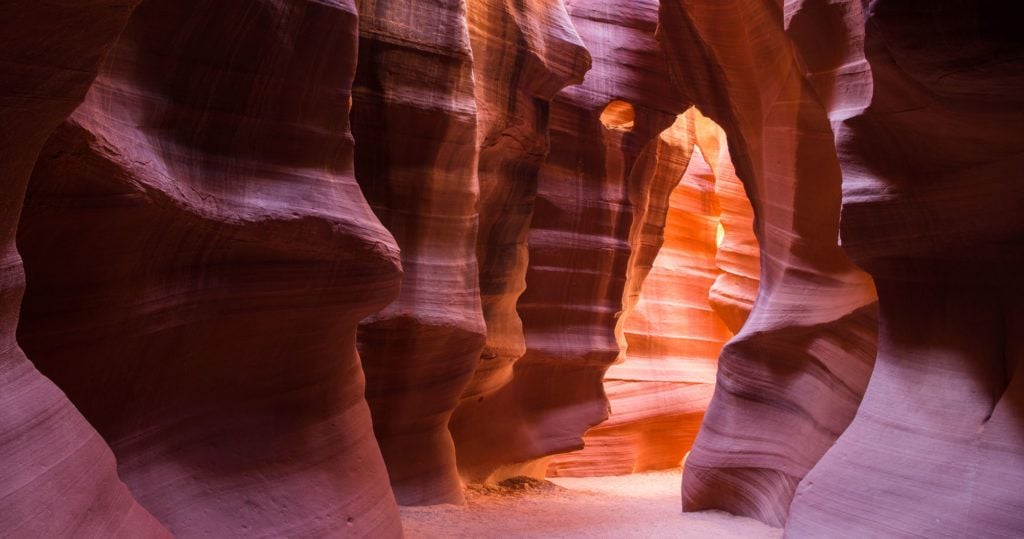

Isn’t it awesome when a new place completely astounds you? For me, that was Upper Antelope Canyon.
I first saw photos years before I visited – those glowing red walls, the twisted, scalloped rock, the famous beams of light cutting through dusty air. I genuinely wasn’t sure a place could look like that in real life.
It does.
Tim and I visited in May 2017, and I was lucky enough to experience something you can no longer get: the photography tour. For two unhurried hours inside the canyon, with a tripod and a guide focused entirely on getting the shot, I came away with some of the most extraordinary photos I’ve ever taken. Those tours were discontinued by the Navajo Nation in 2018, replaced entirely by the standard sightseeing experience, so what I had then is now a piece of history.
What hasn’t changed is the canyon itself. Upper Antelope Canyon remains one of the most breathtaking places on Earth, and today’s standard tours still produce incredible photos if you know what you’re doing. In this guide, I’ll walk you through exactly how to visit, how to book, what everything costs, and how to make the most of your time inside.
At a Glance: Upper Antelope Canyon
LOCATION | Page, Arizona (Navajo Nation land)
ACCESS | Guided tour only
TOUR DURATION | ~90 minutes total, including a 20-minute truck ride each way
TIME INSIDE THE CANYON | ~60 minutes
COST | ~$100–$189 per person, including the $15 Navajo entry fee; midday slots cost more
LIGHT BEAMS | Visible 10:30am–1:30pm; most dramatic May–September
BOOK IN ADVANCE | 3–6 months ahead for midday slots during peak season (March–October)
PHOTOGRAPHY | Handheld only — no tripods, monopods, or selfie sticks
What is Upper Antelope Canyon?
Upper Antelope Canyon is a slot canyon carved into the Navajo sandstone of northern Arizona, located just outside Page on Navajo Nation land. The Navajo name for it is Tsé bighánílíní, meaning “the place where water runs through the rocks,” a fitting description for a canyon shaped entirely by water and time. Over millions of years, flash floods forced their way through cracks in the sandstone, gradually sculpting the sinuous, wave-like walls you see today.
The canyon runs about 600 feet long, with walls rising up to 120 feet above the sandy floor. Because the entrance sits at ground level with less than a 2% incline, it’s the more accessible of the two Antelope Canyons and by far the more visited. It’s also the canyon most people picture when they think of Antelope Canyon.
Upper Antelope Canyon sits within the Lake Powell Navajo Tribal Park. All visits must be made with an authorized Navajo guide. This is both tribal law and a genuine safety requirement, given the flash flood risk inside the canyon.
Upper Antelope Canyon can only be visited with an authorized Navajo tour operator. There is no independent access, and this is strictly enforced. All tour companies are based in or near Page and provide transportation to the canyon, so you don’t need to worry about getting yourself there once you’ve booked.
How to Book a Tour of Upper Antelope Canyon
Book as early as possible. During peak season (March through October), midday slots, the ones that give you the famous light beams, can sell out three to six months in advance. If you have a specific date and time in mind, don’t wait. Off-peak months and early morning or late afternoon slots have more availability, but even those can fill quickly on weekends.
Midday costs more and books faster. Tour operators charge a premium for the 10:30 am–1:30 pm window when light beams appear and lighting is the brightest, and those are the first slots to go. If light beams are a priority for you, book that window as early as you can. If you’re more flexible, earlier or later tours are cheaper and easier to get, just know that the canyon will be noticeably darker.
Arrive early on tour day. Most operators require you to check in 30 to 45 minutes before your tour time, and some ask for a full hour. Check your confirmation carefully, because missing check-in can mean losing your spot with no refund.
One important timing note: the Navajo Nation observes Daylight Saving Time, which the rest of Arizona does not. This means that during summer months, Page runs on a different clock than Phoenix or Flagstaff. Double-check local Page time when planning your arrival because this catches more people off guard than you’d expect.
What We Did
We visited Antelope Canyon in May 2017, back when photography tours were offered (this ended in 2018). Tim took the 1 pm Scenic Tour and I took the 1 pm Photography Tour. Both of us had a good experience, and I loved the Photography Tour. It was expensive but worth every penny, especially since these tours were discontinued one year later, and I was able to get some extraordinary photos.
We used Antelope Slot Canyon Tours and had a great experience.
Tour Companies
All authorized Upper Antelope Canyon tour operators follow the same Navajo Nation rules, so the core experience, with the truck ride out, the guided walk through the canyon, and the one-way exit, is consistent across companies. Where they differ is group size, guide quality, and scheduling. Reading recent reviews before booking is worth the few minutes it takes.
We used Antelope Slot Canyon Tours on our visit and had a great experience. Our guide was knowledgeable, attentive, and genuinely good at positioning us for the best shots. They were the top-rated operator at the time we visited and remain highly reviewed. This is who we recommend if they have availability for your dates.
Here are the authorized operators for Upper Antelope Canyon:
- Antelope Slot Canyon Tours — family-operated, Navajo-owned; climate-controlled 4×4 vans; our top recommendation
- Antelope Canyon Tours, Inc. — one of the oldest operators in Page; also offers tours to Vermilion Cliffs locations including White Pocket and Buckskin Gulch
- Tsé Bíghanílíní Tours — Navajo-owned and operated; located at the canyon entrance
- Adventurous Antelope Canyon Tours — well-reviewed; also offers combo tours with other nearby slot canyons
- Antelope Canyon Navajo Tours — located 3 miles east of Page directly off Highway 98; pricing includes the Navajo permit fee
Note that children under 6 are not permitted on Upper Antelope Canyon tours, and the canyon is not wheelchair accessible. The exit requires climbing a 100-foot hill with stairs.
Booking through GetYourGuide
If the tour companies above don’t have availability for your dates, or if you’d prefer to compare options and book through a single platform, GetYourGuide is a reliable alternative. It aggregates Upper Antelope Canyon tours from multiple operators, lets you filter by time slot and group size, and handles the booking in one place.
GetYourGuide is also the best option if you’re joining from further afield, because they offer day trips to Upper Antelope Canyon departing from Las Vegas, which is around a 4.5-hour drive from Page. If you’re road tripping through the Southwest and not staying overnight in Page, a guided day trip that handles transport can make the logistics much simpler.
Tours & Tickets
Browse available tours and check real-time availability below:
Tour Pricing
Upper Antelope Canyon is not cheap, but for most visitors it’s worth every penny. Here’s how the pricing breaks down.
Navajo entry fee: The Navajo Nation charges a $15 per person entry fee for Upper Antelope Canyon. Some tour operators include this in their listed price; others add it on top. Read the fine print before booking so you’re not surprised at check-in.
Tour cost: Standard sightseeing tours generally run $85–$120 per person, including the Navajo fee, depending on the operator and time of day. Midday slots, the 10:30 am–1:30 pm window when light beams appear, cost more than early morning or late afternoon. Some operators charge a flat rate; others price by time slot, with the most popular midday slots commanding the highest prices.
Third-party booking platforms: Booking through GetYourGuide or similar platforms adds a convenience fee on top of the tour price. You’re paying for the ease of comparison shopping and a single booking interface. If you book directly with a tour company, you’ll typically pay less.
Tipping your guide: Tips are customary and genuinely appreciated. The guides work hard and the good ones make a real difference to your experience. Bring $10–$15 in cash, though many guides also accept Venmo.
Refund policy: Most operators have strict no-refund policies, particularly for last-minute cancellations. Travel insurance is worth considering if your plans might change.
Prices shift seasonally and vary by operator, so always confirm current pricing directly with the company or platform when you book.

What to Expect on Your Tour
At the tour operator’s office: All Upper Antelope Canyon tours begin at your operator’s office in Page, not at the canyon itself. Arrive at least 30 – 45 minutes before your tour time (some operators require a full hour) and use the restrooms before you board. There are none inside the canyon.
The truck ride out: You’ll be loaded into a 4WD truck for the ride to the canyon entrance, which takes about 20 minutes across a sandy desert track. The ride is bumpy because the track runs through a sandy wash, so secure your camera and hold on. It’s part of the experience.
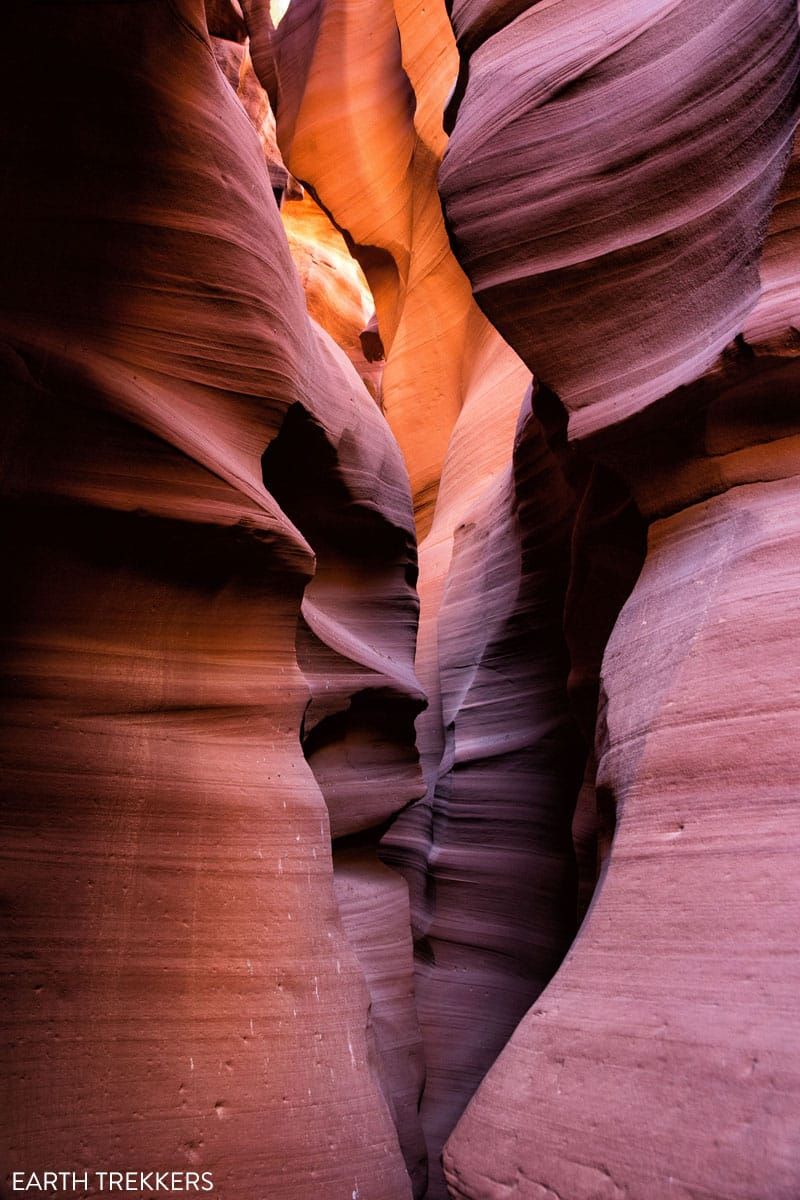
Inside the canyon: The entrance sits at ground level, and you walk straight in. What hits you first is the color. The walls shift from burnt orange to deep red to soft purple depending on where you’re standing and what the light is doing. Your guide will stop at key spots throughout the canyon, share Navajo cultural stories and geology, and help position you for the best photos. The guides know every angle inside this canyon and genuinely make a difference to the photos you’ll come home with.
The canyon is approximately 600 feet long and the walk through is easy — flat, sandy floor, no significant obstacles. The walls rise up to 120 feet above you at the highest points, narrowing overhead to a sliver of sky. Look up often.
The exit: Tours no longer loop back through the canyon. Once you reach the far end, you’ll exit via a one-way route, up and over the canyon walls via a 100-foot hill with 21 stairs up and 112 steps down, including a raised metal ramp section. The full walk is about a mile and takes 20–30 minutes. It’s not difficult, but it does involve stairs, so it’s worth factoring in if you’re traveling with anyone who has mobility limitations.
Back in Page: The truck returns you to your operator’s office. Total time from check-in to return is typically 90 minutes to two hours.
Upper Antelope Canyon Photos
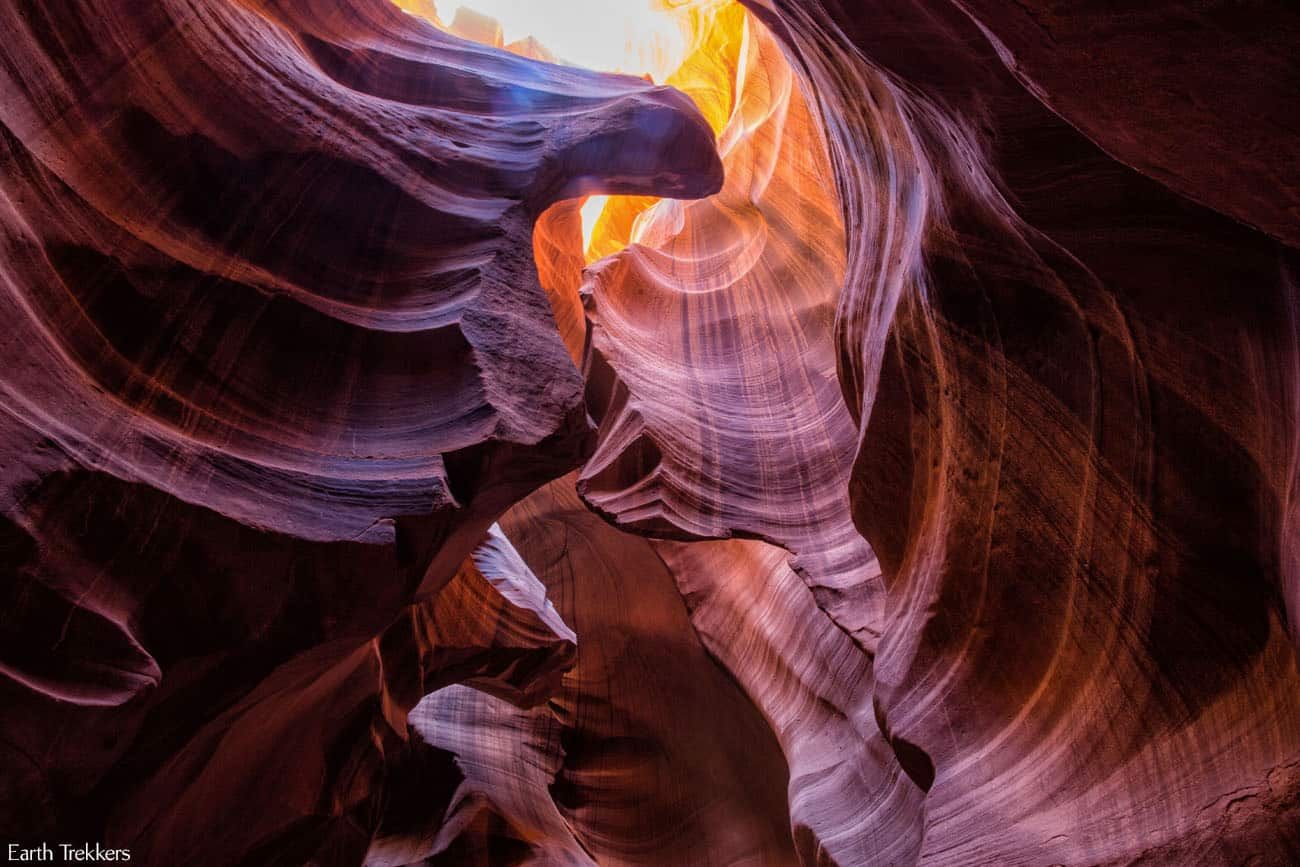
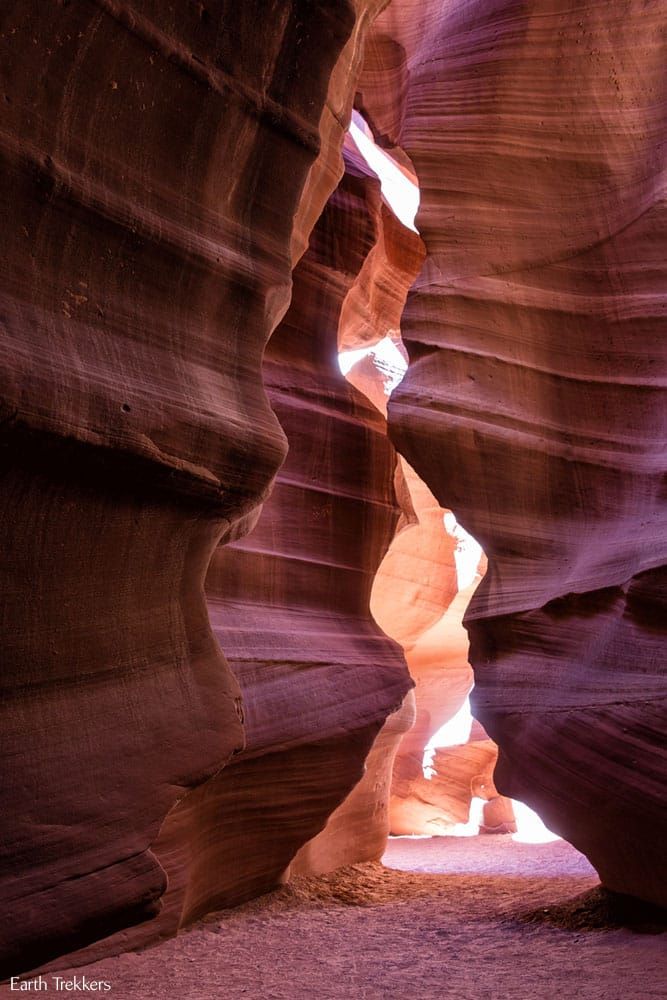
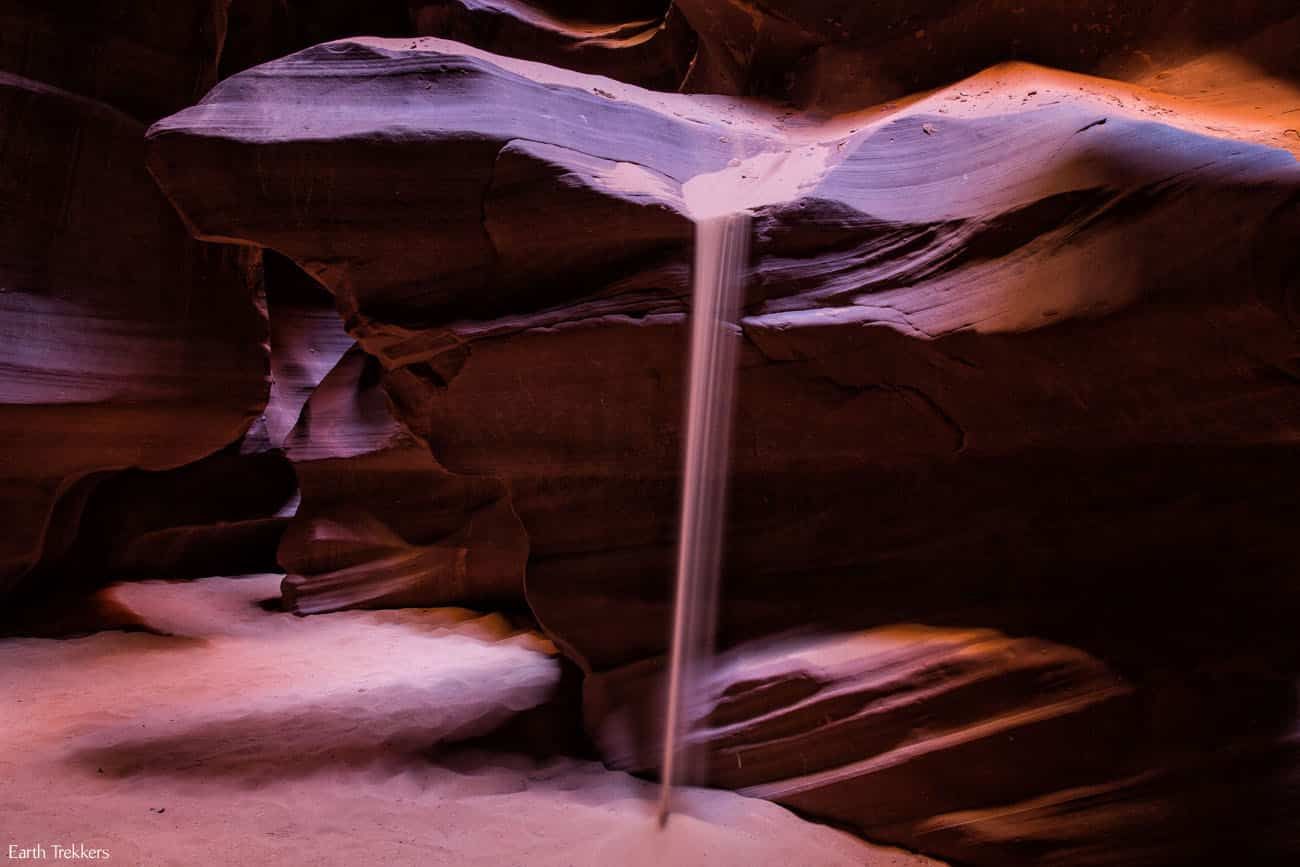
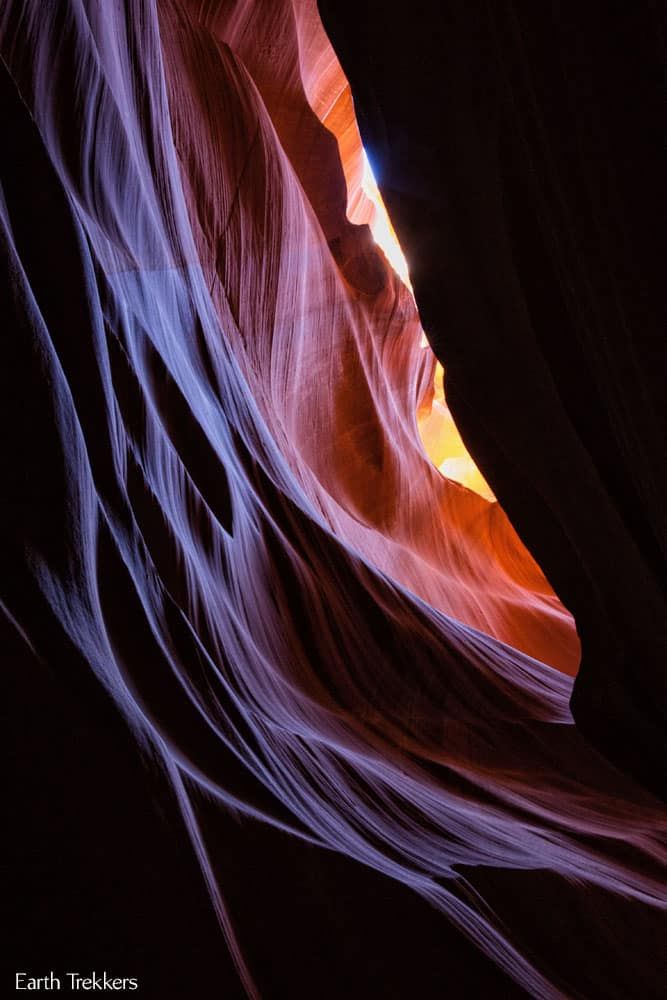
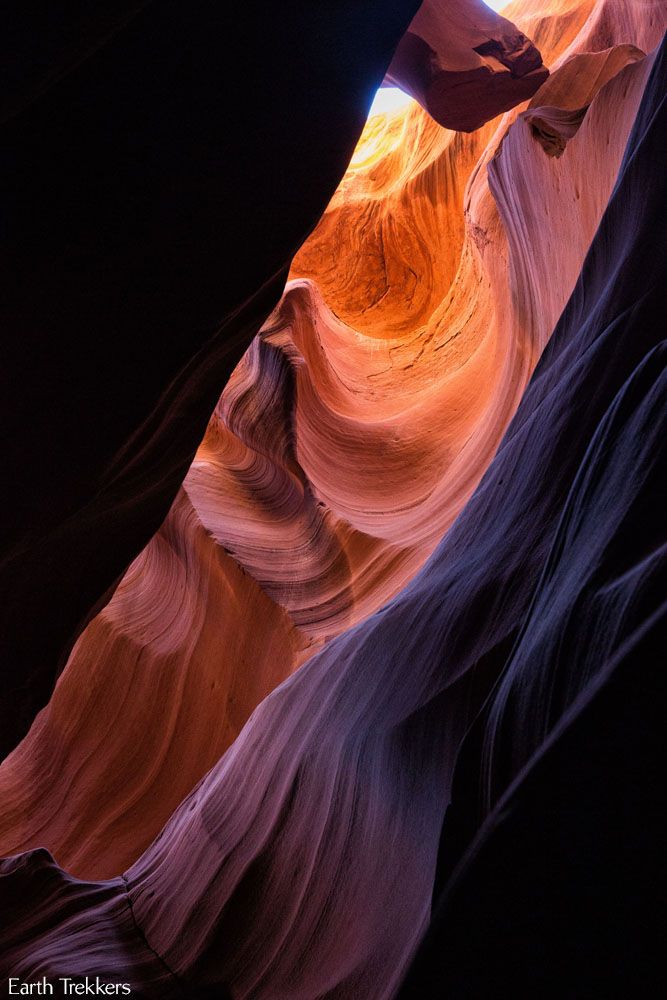
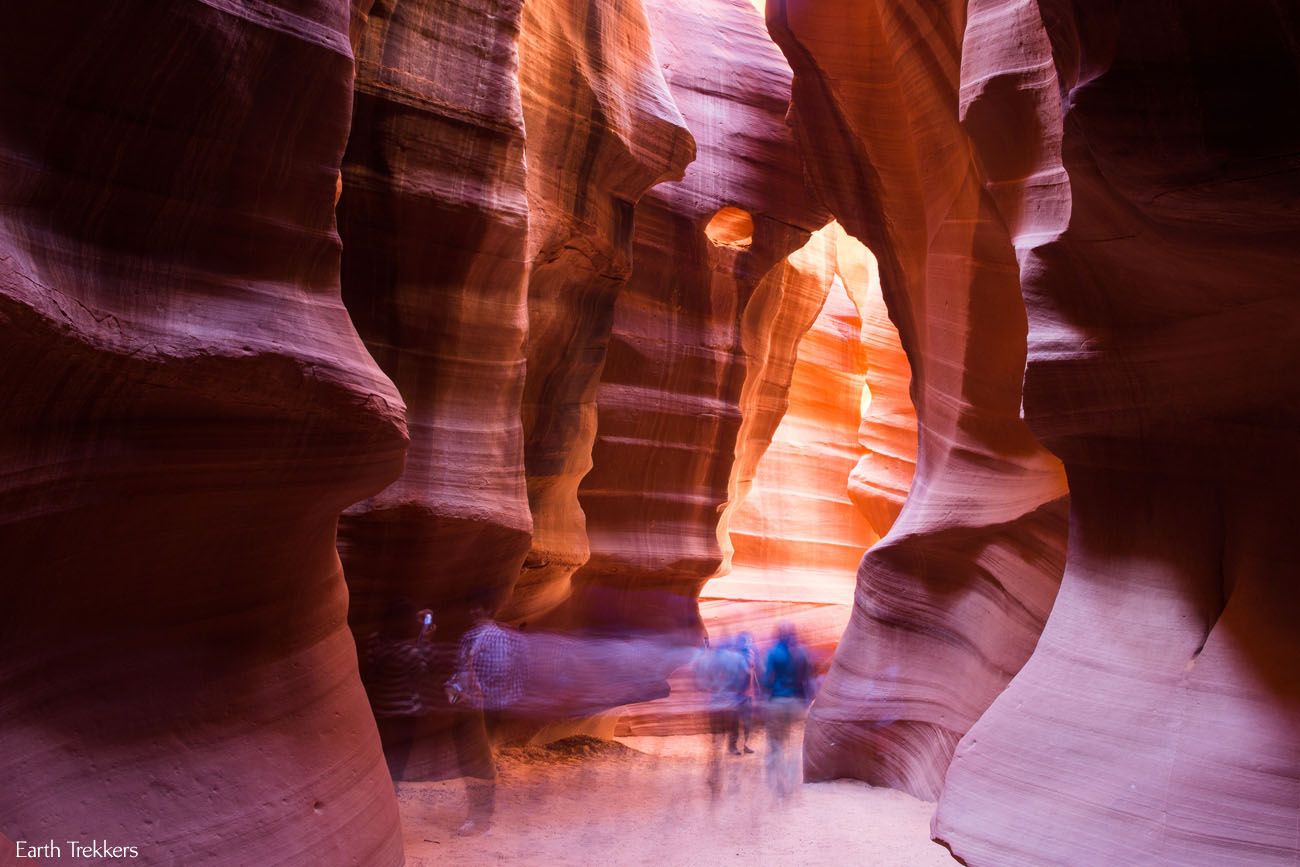
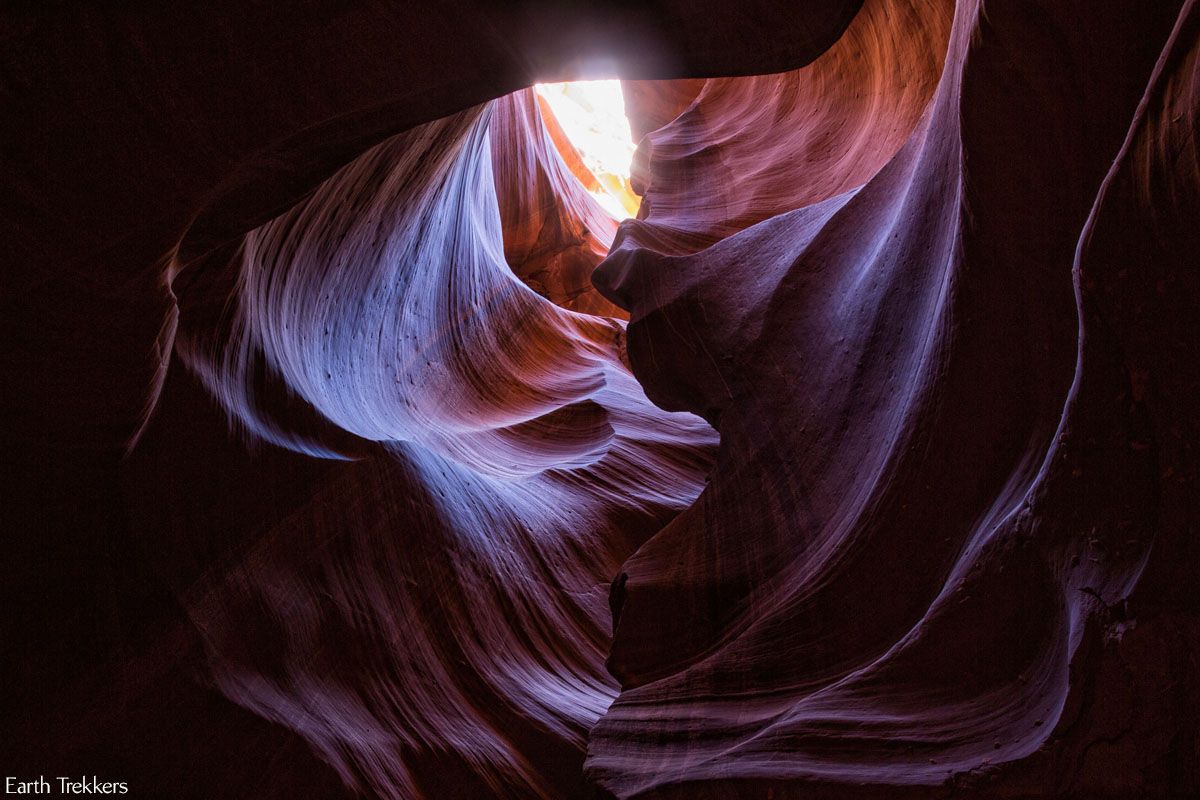
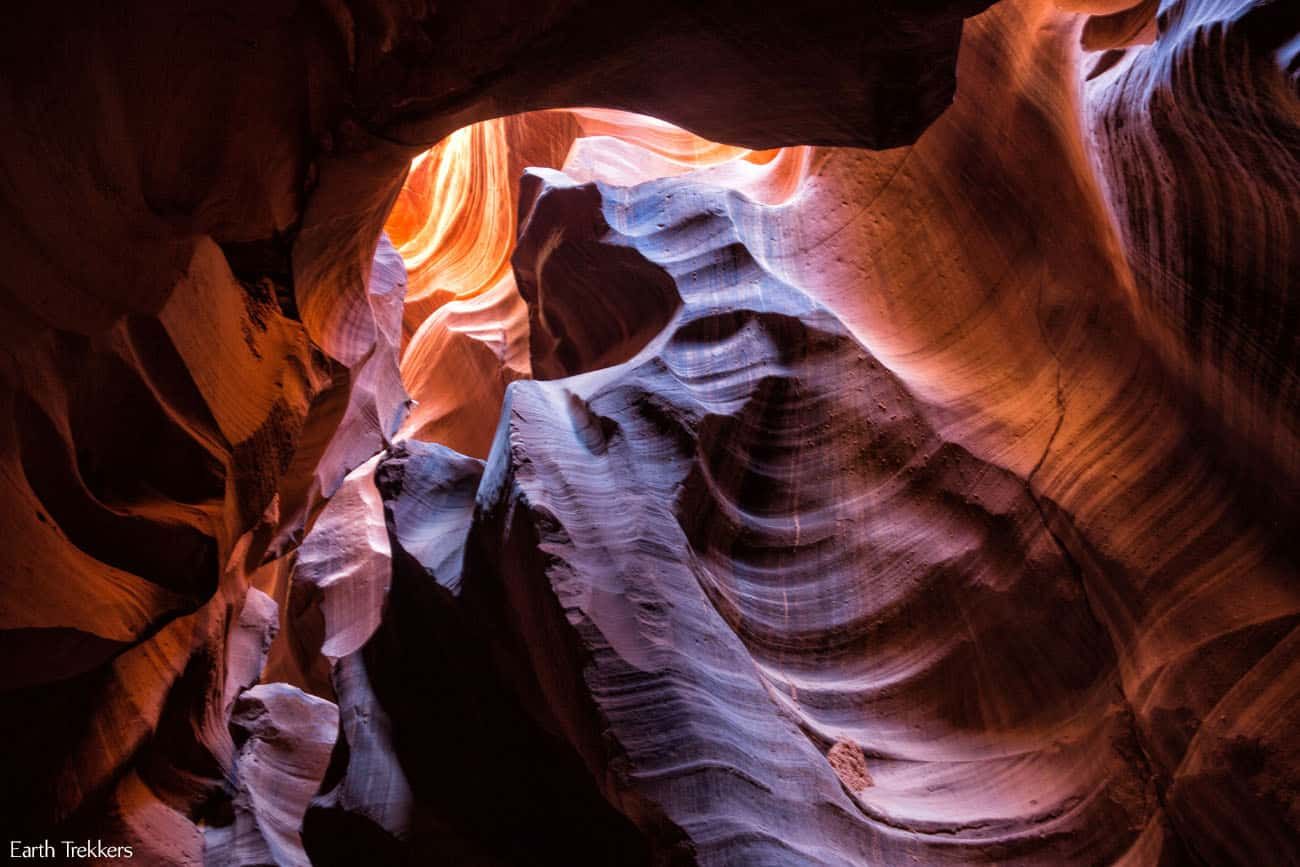
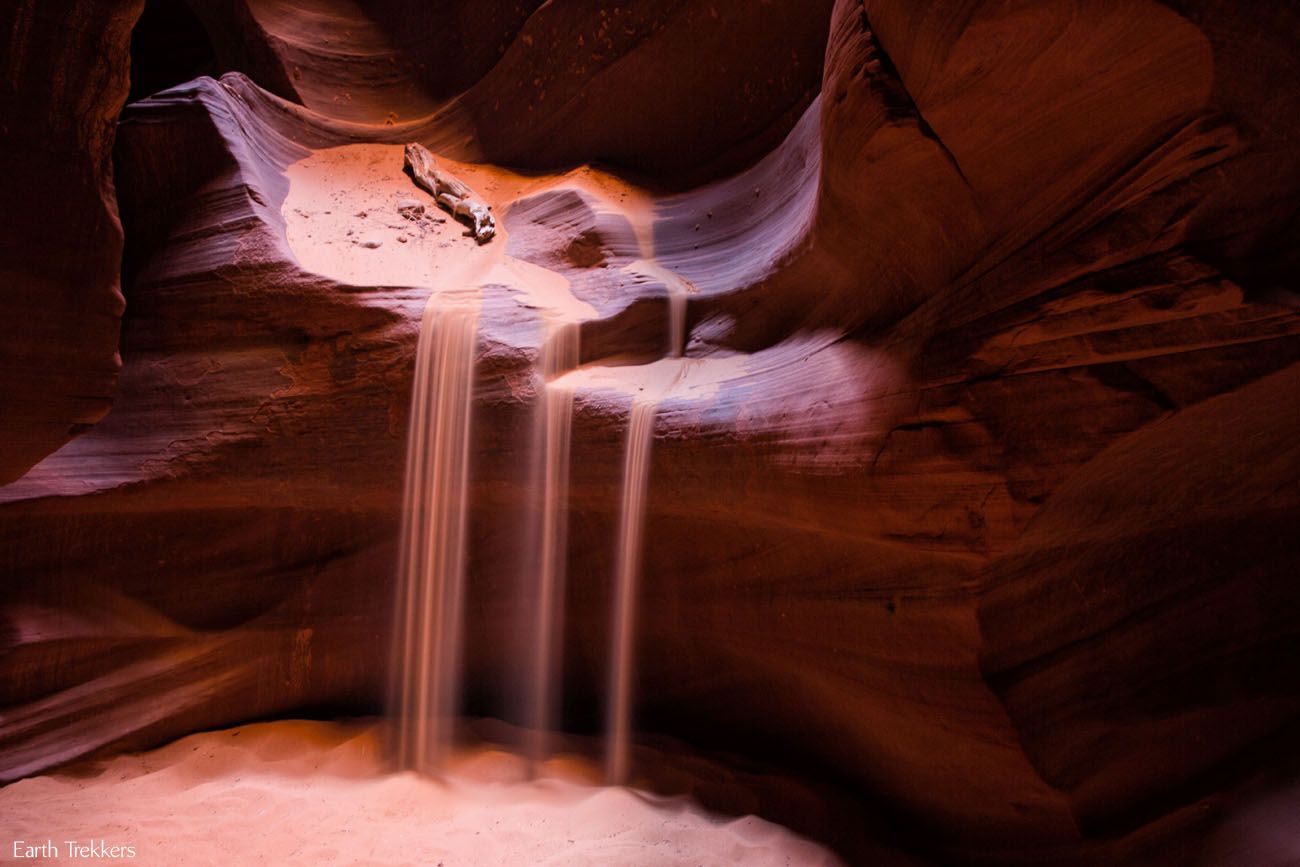
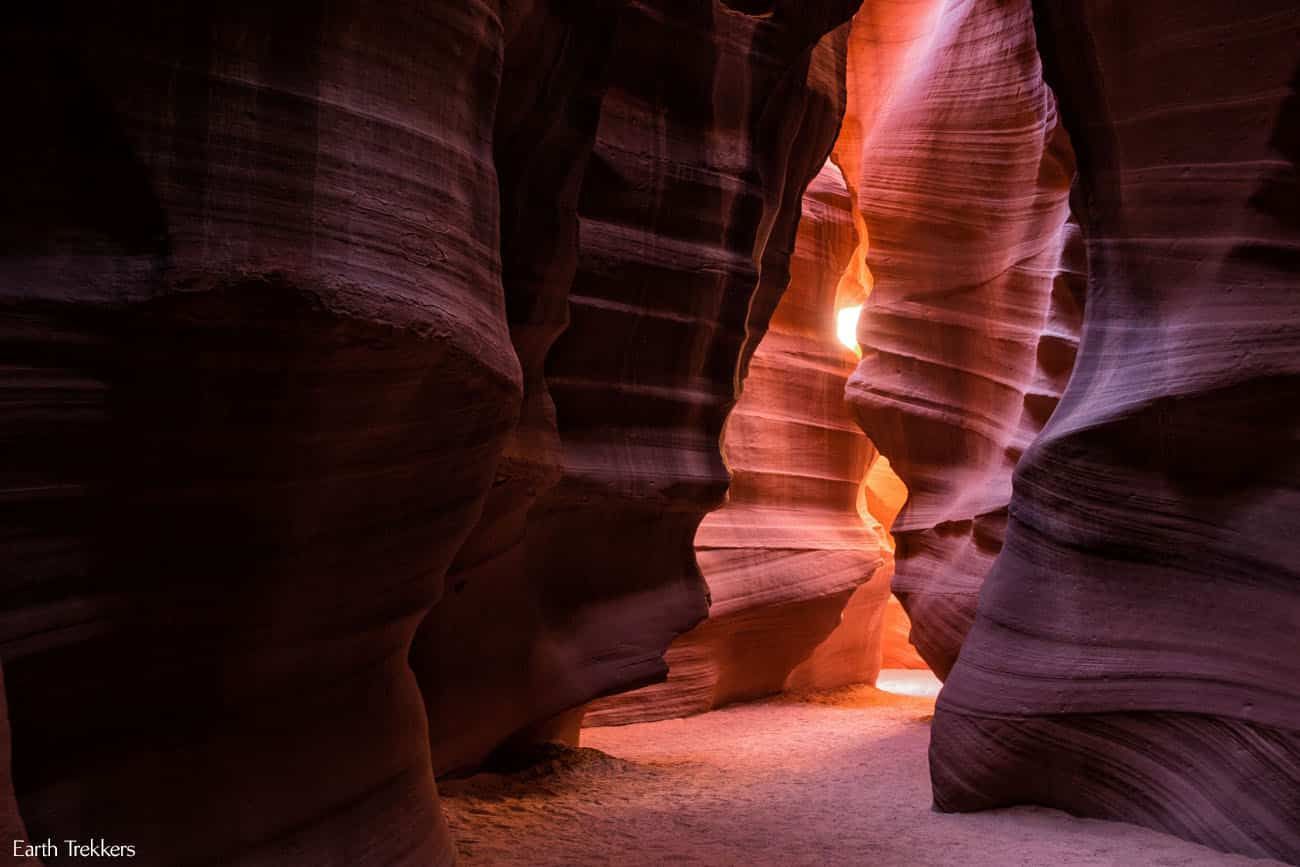
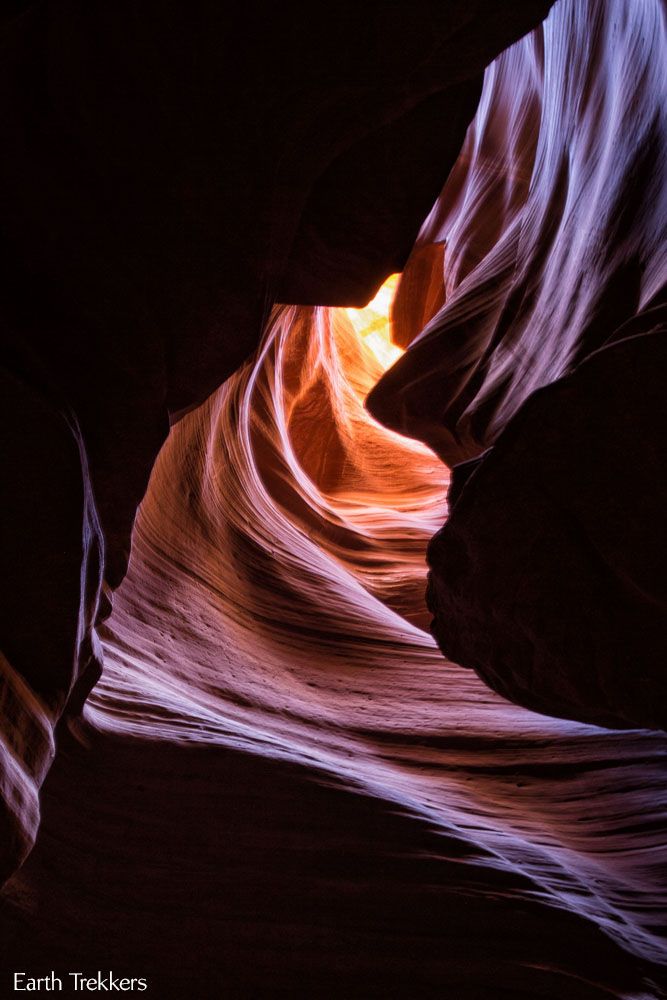
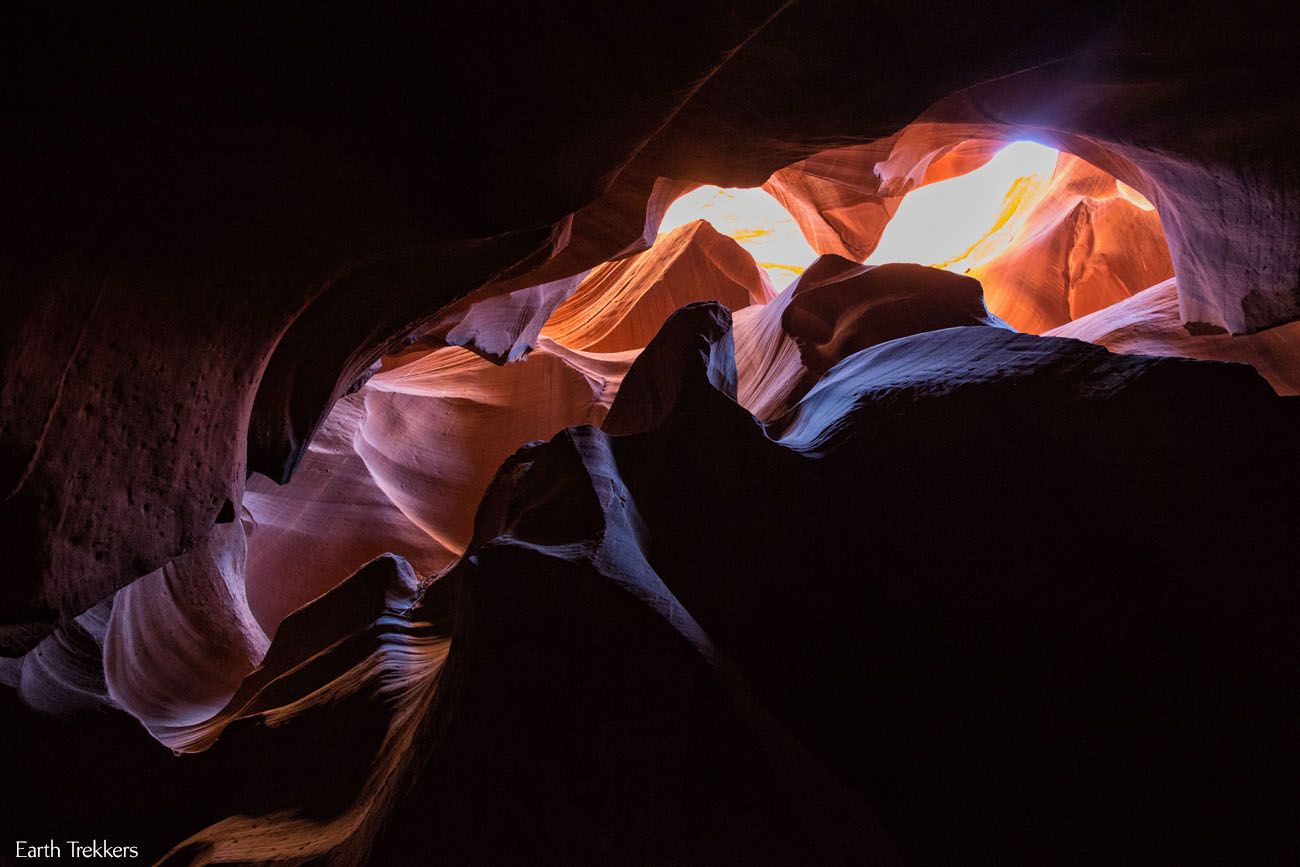
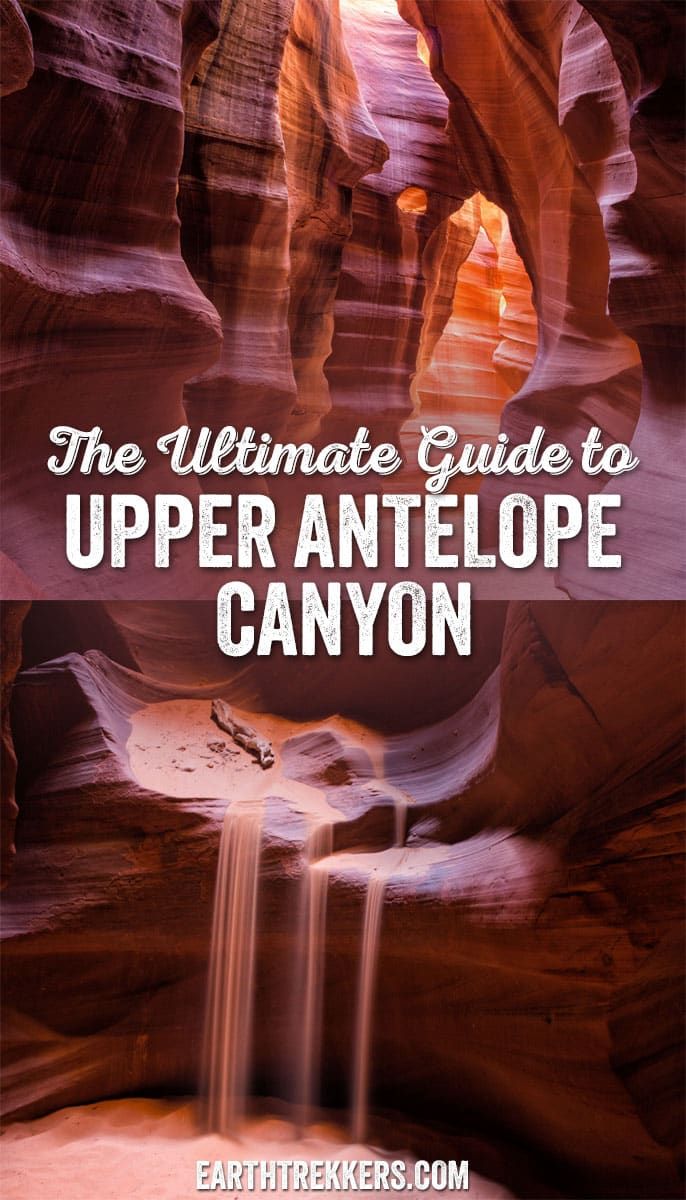
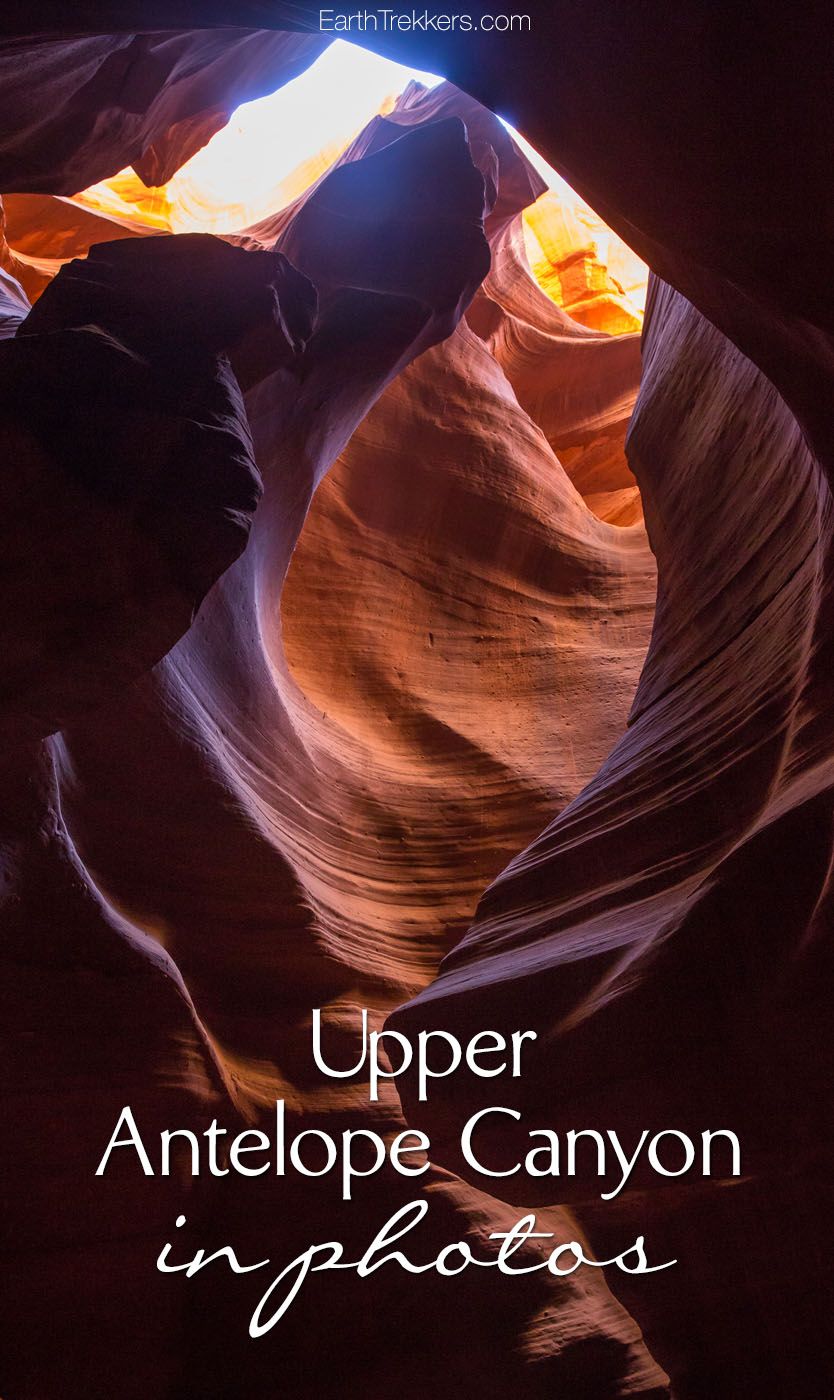
The photos below were taken during our May 2017 visit on the old photography tour: two hours inside the canyon with a tripod, deliberate compositions, and a guide focused entirely on the shot. That experience no longer exists, but these images give you a genuine sense of what the canyon looks like across different light conditions. You’ll notice the early shots are warmer and more dramatic; by the end of the tour, the light had shifted and the canyon took on a darker, moodier quality.
Photography Tips
Today’s standard tours are handheld only (no tripods, monopods, or selfie sticks) but that doesn’t mean you can’t come home with incredible photos. Here’s how to make the most of it.
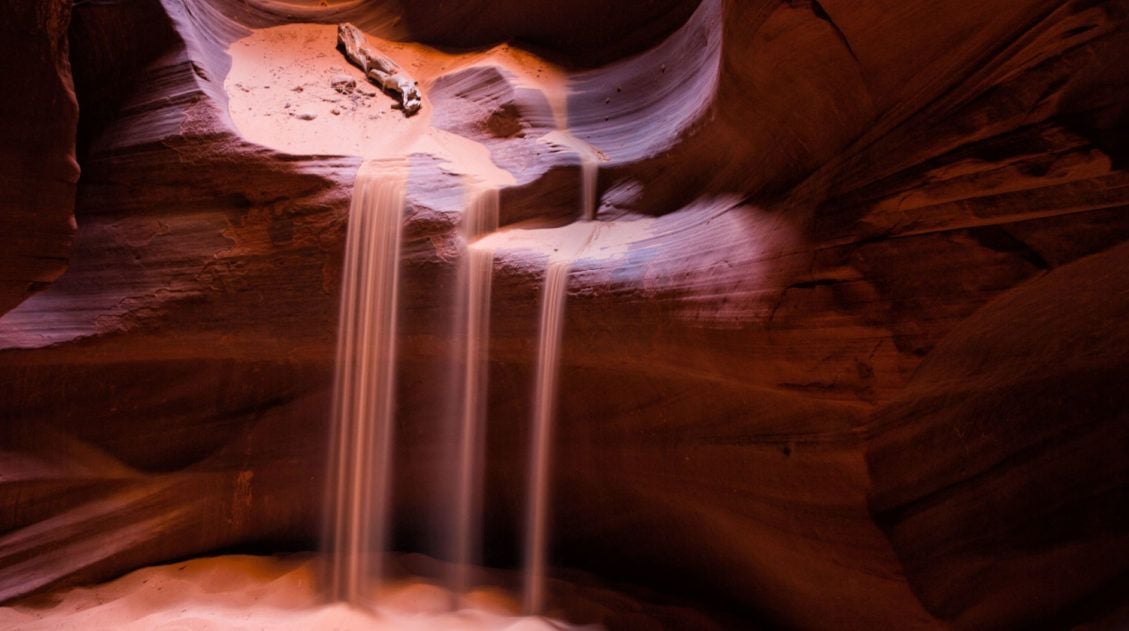
Use your guide. This is the single most important tip. Your Navajo guide knows every angle, every pocket of light, and exactly where to stand for each shot. They’ll position you, tell you when to shoot, and cascade sand for photos.
Turn your flash off. Flash kills the natural color of the canyon walls. Every camera and phone should have flash disabled before you enter.
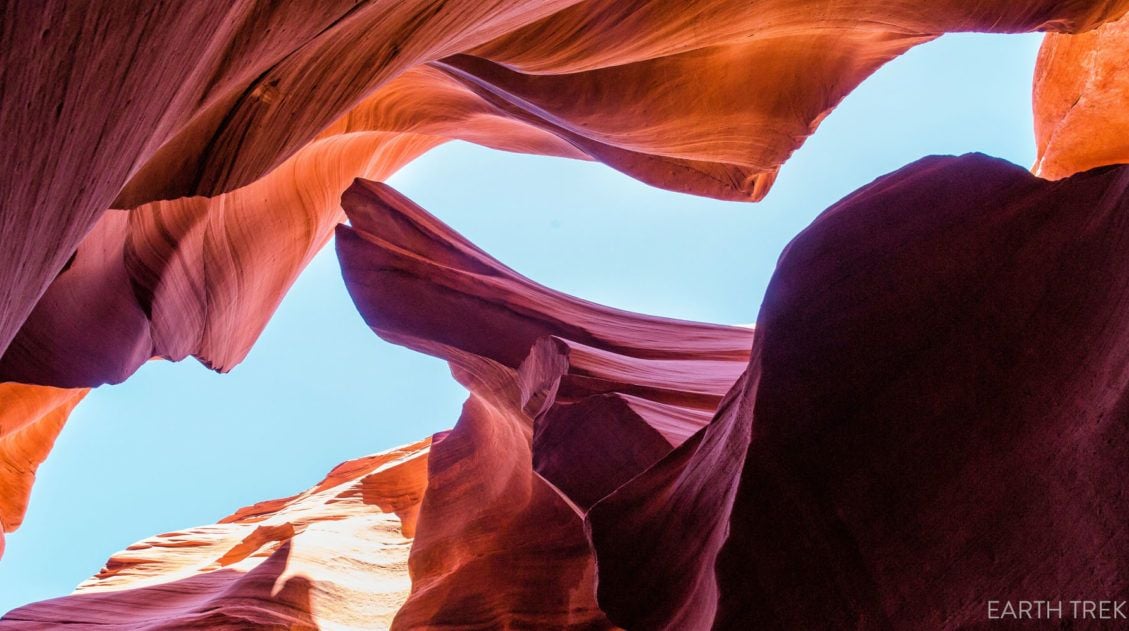
Shoot toward the light. The most dramatic shots come from pointing your camera upward or toward the narrow opening overhead, where the light enters. The sliver of sky framed by the canyon walls is one of the canyon’s best compositions.
For phone cameras: your guide will often suggest specific settings for your phone model. Let them, they’ve seen thousands of visitors shoot this canyon and know what works. Portrait mode can help blur the sandy floor and emphasize the walls; experiment as you move through.
For DSLRs: use a high ISO and wide aperture to compensate for the low light.
Shoot throughout the tour. The canyon changes color as you move through it and as the light shifts. Don’t spend all your time in one spot. Some of our most interesting shots came from sections of the canyon that looked unremarkable at first glance.
If you want to know exactly what camera gear we use to capture shots like these, we share everything in our Travel Photography Gear Guide.
Best Time to Visit Upper Antelope Canyon
We visited in May 2017, arriving for the 1 pm tour, which put us inside the canyon around 1:20 pm. The light beams were still present when we entered but gradually faded as the tour went on. You can see it in our photos, where the early shots glow with shafts of light and the later ones are noticeably darker and moodier. If light beams are your priority, earlier in the midday window is better than later. By 3 pm, the canyon is darker and photography becomes significantly more challenging.
The beams themselves only appear when the sun is high enough to shine directly down through the narrow canyon opening, roughly 10:30 am to 1:30 pm. This window exists year-round on sunny days, but the angle is most dramatic from May through September, when the sun is at its highest. Spring and fall still produce light beams; winter does not.
Outside of the light beam question, the best time to visit comes down to your tolerance for crowds. Peak season runs March through October, with summer, particularly June through August, bringing the heaviest foot traffic and the highest prices. Monsoon season (July through September) also brings an increased risk of flash flood closures, which can disrupt plans with little warning.
If you can visit in April, May, or September, you’ll hit the sweet spot: reliable light beams, manageable crowds, and pleasant temperatures.
- Spring (March–May): Light beams building in intensity, crowds growing but not yet at peak, ideal weather
- Summer (June–August): Most dramatic light beams, hottest temperatures, maximum crowds, highest prices, monsoon flood risk; book 4 – 6 months out
- Fall (September–October): Excellent light beams, crowds beginning to thin, comfortable temperatures, a strong alternative to summer
- Winter (November–February): No light beams, fewest crowds, lowest prices, the canyon colors are still stunning, best if you want a quieter experience
Is Upper Antelope Canyon Worth It?
Yes, absolutely.
When I think about Upper Antelope Canyon, I’m partly thinking about the photography tour, which was an extraordinary experience that no longer exists. But Tim took the standard sightseeing tour on the same day I took the photography tour, and his verdict was just as enthusiastic as mine. The canyon itself is the draw, and the canyon hasn’t changed.
What you’re paying for is access to one of the most visually stunning places on Earth. The colors, the light, the scale of those walls rising 120 feet above a narrow sandy floor, none of it is adequately captured in photos, including ours.
The cost is real. Budget $100–$150+ per person by the time you factor in the tour, the Navajo entry fee, and a tip for your guide. The crowds during peak midday hours are also real. But neither of those things diminishes what the canyon actually is. Book a midday slot if light beams matter to you, follow your guide’s photography direction, and give yourself a moment to just look around rather than shooting the entire time.
If you’re weighing Upper against Lower Antelope Canyon, or trying to decide whether to visit one or both, read our full comparison before you book. They’re different enough experiences that the choice genuinely depends on what you’re looking for.
What to Bring (And What to Leave Behind)
The rules inside Upper Antelope Canyon are strict, and knowing them before you arrive will save you from an awkward moment at the entrance.
Bring:
- Closed-toe shoes with good traction — the floor is sandy and can be uneven in places
- A hat and sunscreen — you’ll spend time outside before and after the canyon portion
- Layers — it runs 5–10 degrees cooler inside the canyon than the desert air outside
- One water bottle — the only food or drink permitted inside
- A fully charged phone or camera — your guide will help you get the best shots
- Cash or Venmo for your guide’s tip
- Glasses instead of contacts if possible — sand blows through the canyon on windy days and contact lens wearers often regret it
Leave behind:
- Bags of any kind — backpacks, fanny packs, and purses are strictly prohibited inside the canyon
- Tripods, monopods, and selfie sticks — not allowed on standard tours
- Food and beverages — other than your one water bottle, nothing else is permitted
- Strollers — not permitted, and the exit terrain makes them impractical anyway
One more thing worth knowing: there are no restrooms inside the canyon. Use the facilities at your tour operator’s office before you board the truck.
Canyon X: A Less Crowded Alternative
If Upper Antelope Canyon is sold out for your dates, or if you simply want a slot canyon experience without the crowds, Canyon X is worth knowing about. Located southeast of Lower Antelope Canyon near Page, it’s part of the same sandstone system but sees a fraction of the visitors. The canyon gets its name from the X-shape formed where two slot canyon sections intersect, creating a distinctive open-sky view that’s unlike anything in Upper or Lower.
Like all Antelope Canyon locations, Canyon X requires a Navajo guide and advance reservations. Tours are offered by a smaller number of operators, with Antelope Canyon X Tours being the primary option. Group sizes tend to be smaller, which means more time at each spot and a less rushed experience overall.
Canyon X won’t give you the famous light beams of Upper Antelope Canyon, but the formations are genuinely beautiful and the photographic opportunities are excellent. If you’re visiting with someone who already has an Upper Canyon reservation but you can’t get a spot, or if you’re looking to add a second canyon to your day, it’s a strong choice.
Flash Flood Safety
Flash floods are a genuine danger inside Upper Antelope Canyon, not a boilerplate warning. The canyon can flood with almost no notice. A storm miles away upstream is enough to send water rushing through the narrow channel within minutes. In 1997, eleven people were killed in Lower Antelope Canyon on a day that appeared clear at the entrance. This is the primary reason guided access is mandatory: your Navajo guide monitors conditions, coordinates with local forecasters, and will cancel or evacuate if anything looks unsafe. If your guide signals evacuation, move immediately.
The highest risk period is July through September during Arizona’s monsoon season. Tours still run during this window, but cancellations are more common. If you’re visiting in summer, have a flexible plan and be aware that safety cancellations typically don’t come with refunds.
Frequently Asked Questions
Do I need to book Upper Antelope Canyon in advance?
Yes, and the earlier the better. Midday slots during peak season (March–October) can sell out three to six months ahead. Even off-peak months fill quickly on weekends. Book as soon as your travel dates are confirmed.
Can you visit Upper Antelope Canyon without a guide?
No. Independent access is not permitted. This is both tribal law and a genuine safety requirement given the flash flood risk. All visits must be made with an authorized Navajo tour operator.
What time do the light beams appear at Upper Antelope Canyon?
Light beams are visible approximately 10:30 am–1:30 pm on sunny days. They appear year-round during this window but are most dramatic from May through September, when the sun is at its highest angle.
Are photography tours still available?
No. The Navajo Nation discontinued dedicated photography tours in 2018. All tours today are standard sightseeing tours with handheld photography only: no tripods, monopods, or selfie sticks permitted.
Is Upper Antelope Canyon accessible for people with limited mobility?
No. The canyon is not wheelchair accessible, and the one-way exit involves a 100-foot hill with stairs. Visitors need to be able to complete the hike without assistance.
How far is Upper Antelope Canyon from Las Vegas and Phoenix?
Page, Arizona is approximately 4.5 hours by car from both Las Vegas and Phoenix. From the Grand Canyon South Rim, it’s roughly 2.5 hours. Most visitors base themselves in Page for at least one night.
Planning Your Trip to Arizona
Upper Antelope Canyon sits at the heart of one of the American Southwest’s great road trip corridors. For a full overview of what to see and do across the state, our Arizona Travel Guide covers the best destinations, parks, and experiences in Arizona from the Grand Canyon to the Sonoran Desert.
Most visitors combine Antelope Canyon with nearby Horseshoe Bend, which is less than 10 minutes from Page and easy to add to the same day. Monument Valley is roughly two hours east and pairs beautifully with a Page visit. Our guide to Monument Valley covers everything you need to know for a first-time visit.
For those continuing south, our Grand Canyon National Park Travel Guide is the starting point for planning time at one of the world’s great natural wonders, with links to all of our Grand Canyon content including viewpoints, hikes, and itineraries. Southwest of the Grand Canyon, Sedona is one of Arizona’s most rewarding destinations. Our Sedona Travel Guide links to all of our hiking, restaurant, and things-to-do coverage across the area.
If this is part of a longer Southwest road trip, our 10-day American Southwest itinerary builds a full route through the region’s highlights, including Antelope Canyon, the Grand Canyon, Zion, and Bryce Canyon.
Just around the corner from Upper Antelope Canyon is Lower Antelope Canyon. You can visit one or both of these in one day. Learn how to visit Lower Antelope Canyon and find out the pros and cons of visiting each them in our articles ↓
If you have any questions about visiting Upper Antelope Canyon, let us know in the comment section below.
Continue Exploring the American Southwest
If this is part of a bigger road trip through the USA, visit our United States Travel Guide for more inspiration and travel planning tips.
The Ultimate Arizona Road Trip Itinerary
On this Arizona road trip itinerary, you will visit three national parks, drive past the buttes and mesas of Monument Valley, walk through magical Antelope Canyon, and hike the desert hills of Sedona. Arizona is home to some of the most iconic landscapes in the United States and this road trip is the perfect way […]
15 Amazing Things to Do in Sedona (Beyond Just Hiking the Trails)
What do you look for when picking the perfect vacation spot? Outdoor adventures? Shopping? Wineries? Great restaurants? Beautiful sunsets? A fun place to take the kids? What if I told you that you could get all of these in one place…Sedona, Arizona. In this article, learn about the best things to do in Sedona with […]
Capturing the Action: How to Take Great Photos When Traveling
Traveling and photography go hand in hand. When you are in a new place and experiencing new things, it’s only normal that you would want to get that perfect photo, something to remember the moment by. I love photography. When I travel, one of the things I look forward to most is having a memory […]
17 Breathtaking South Rim Viewpoints in the Grand Canyon
Epic, awe-inspiring, jaw-dropping…these are all words that describe the Grand Canyon. But in all honesty, words, and even photos, cannot quite capture what it is like to stand on the rim and gaze out across the canyon. There are dozens of viewpoints along the South Rim of the Grand Canyon. Each one of these viewpoints […]
One Day in the Grand Canyon Itinerary: Things to Do, Map, Photos
If you only have one day in the Grand Canyon, what should you do? Grand Canyon National Park is enormous. With thousands of acres of land, four rims to visit, plus the option to hike below the rim, there is no way that you will get to everything in just one day. However, with one […]
Two Week American Southwest Road Trip: Grand Canyon & Utah’s Mighty 5
This is one of the best road trips in the USA. On this American Southwest road trip, you will visit Utah’s Mighty 5, the Grand Canyon, and a handful of wonderful state parks and national monuments. This is the itinerary I wish we had when we planned our first road trip to the American Southwest. […]
Petrified Forest National Park: Travel Guide & Itinerary
Petrified Forest National Park beat all of my expectations. I imagined a barren desert with a few colorful hills, some ancient, petrified stumps, and soaring temperatures in the early summer. Instead, we were treated to the colorful, uniquely beautiful hills of the Painted Desert, giant, petrified trees that puzzle the mind, and the chance to […]
Arizona Travel Guide: Top Places to Visit in Arizona
Arizona Travel Guide From the awe-inspiring Grand Canyon to the sprawling Sonoran Desert, Arizona offers a diverse mix of natural wonders, bustling cities, and deep-rooted traditions. Visit Arizona to hike amidst its slot canyons and desert landscapes, view the starry night skies, and see the famously tall saguaro cactus. Take a trip to Arizona on […]
Soldier Pass Trail & Soldier Pass Cave: Step-By-Step Trail Guide
There are several reasons why so many hikers rave about the Soldier Pass Trail. For one thing, it is relatively short and easy to hike. But the main reason why people love this trail is to visit the Seven Sacred Pools, hike past a sinkhole named Devil’s Kitchen, and hike to the Soldier Pass cave. […]
How to Visit Monument Valley: Ultimate Guide for First Time Visitors
With sandstone buttes, colossal mesas, and panoramic vistas, Monument Valley is one of the USA’s iconic landscapes. Sure, it’s possible to drive right through Monument Valley, visiting the main sites in just two or three hours, but if you really want to explore it, consider spending at least one day here. We were surprised at […]
16 Best Things to Do in Valley of Fire State Park
Discover the best things to do in Valley of Fire State Park, along with a streamlined itinerary that covers the highlights efficiently, making it an ideal day trip from Las Vegas. The Valley of Fire State Park is a brilliant, colorful outdoor destination located in Nevada, just one hour from Las Vegas. Filled with panoramic […]
What’s It Like to Drive Cottonwood Canyon Road?
Cottonwood Canyon Road is a scenic, unpaved road that travels through Grand Staircase-Escalante National Monument. It connects the town of Cannonville with Highway 89, just west of Big Water. Tim and I drove this road during our first road trip through Arizona and Utah (we’ve since been back multiple times). Since we were traveling from Page, […]

Comments 23